Dr. Giovanni Scornavacca
26 June 2026 · 24 min read
Medically reviewed by Dr. Giovanni Scornavacca — Hair Restoration Specialist, Carisma Hair Clinic, St Julian's, Malta. 20+ years clinical experience, trained in Rome and Bologna.
Medically reviewed by Dr. Giovanni Scornavacca — Hair Restoration Specialist, Carisma Hair Clinic, St Julian's, Malta. 20+ years clinical experience.
Male Pattern Baldness in Malta: Causes, Stages and What You Can Still Do About It
Male pattern baldness (androgenetic alopecia) is a progressive, hormonally driven condition affecting approximately 50% of men by age 50. It is caused by a genetic sensitivity to dihydrotestosterone (DHT), which gradually miniaturises hair follicles over years or decades. The condition is not reversible once follicles are lost, but when identified early — typically at Norwood stages I through IV — evidence-based non-surgical treatment can stabilise loss and, in many cases, produce measurable regrowth. Results may vary for each individual depending on their genetic profile, age, and Norwood stage at presentation.
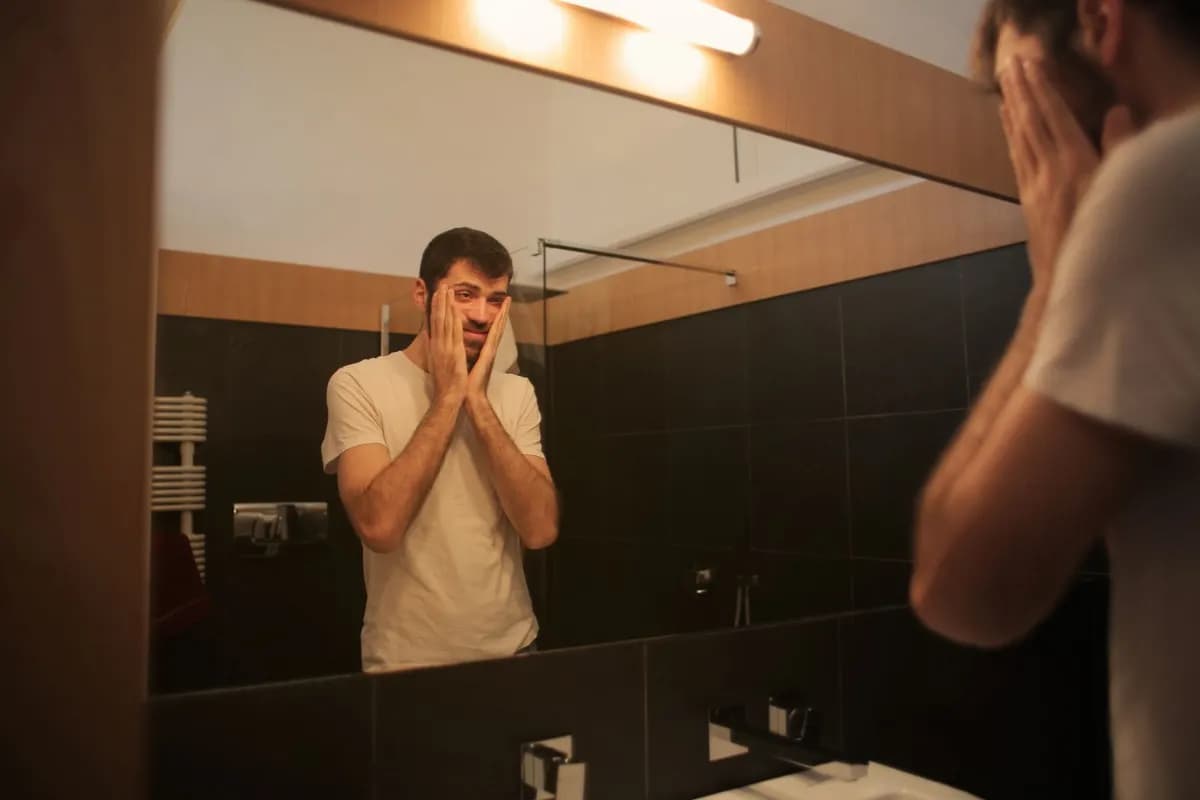
It usually begins at night. You are standing at the bathroom sink, or catching your reflection at an unexpected angle, and something shifts. The hairline looks further back than you remembered. The crown looks thinner in certain light. You tilt your head, adjust the angle, and tell yourself it is probably nothing.
For many men across Malta, that moment arrives in their late twenties or early thirties — sometimes earlier. By the time the change is unmistakable, the biological process has already been running for five to ten years. That is not a failure of awareness. That is how male pattern baldness works: slowly, invisibly, and ahead of anything you can see in a mirror.
Androgenetic alopecia — the clinical term for male pattern baldness — is the most common form of hair loss in men worldwide, and Malta is no different. Around half of men will experience clinically meaningful hair thinning by age 50. The condition is not a sign of poor health, stress, or lifestyle choices. It is a genetic response to a normal hormone, playing out in follicles that were always predisposed to respond this way.
Understanding what is actually happening — at the level of the follicle, the hormone, the gene — removes a great deal of the confusion that surrounds this topic. It also makes it easier to decide what to do, and when.
Contents
- What Actually Causes Male Pattern Baldness
- How Common Is This in Malta — and Who Is At Risk
- The Norwood Scale: What Stage Are You At
- Which Stages Respond Best to Non-Surgical Treatment
- Why Most Men Wait Too Long
- A Factor Most Hair Loss Websites Don't Mention: Malta's UV Environment
- Treatment Options for Male Pattern Baldness in Malta
- Frequently Asked Questions About Male Pattern Baldness in Malta
- Ready to Take Control of Your Hair Loss?
What Actually Causes Male Pattern Baldness
The mechanism is precise and well-established. Testosterone circulates in the bloodstream in all men. In genetically predisposed individuals, an enzyme called type II 5-alpha reductase converts testosterone into dihydrotestosterone — DHT — at a higher rate within hair follicles on the scalp. DHT binds to androgen receptors in those follicles and triggers a cellular cascade that progressively shortens the active growth phase (anagen) of each hair cycle. According to a comprehensive review published in PMC on androgenetic alopecia, this DHT-driven follicular miniaturisation is the primary pathophysiological mechanism in male pattern baldness.
With each passing cycle, the growth phase becomes a little shorter and the resting phase a little longer. Hair shafts emerge progressively thinner and shorter. Eventually, follicles produce only fine, unpigmented vellus hairs — the barely-visible "peach fuzz" seen in advanced stages — and ultimately enter permanent dormancy. This process is called follicular miniaturisation, and it is the defining biological event in androgenetic alopecia.
What makes this particularly relevant to treatment timing is the word "progressive." Miniaturisation is not a binary state — it is a spectrum. A follicle that is partially miniaturised can, with appropriate intervention, be reactivated. A follicle that has been dormant for years cannot. The therapeutic window is real, but it is not permanent.
One detail that surprises many patients: the visible thinning they notice today is the output of a miniaturisation process that began, on average, five to ten years earlier. The follicle was already being affected long before the mirror revealed anything.
How Common Is This in Malta — and Who Is At Risk
Approximately 50% of men will experience androgenetic alopecia by age 50. By age 70, that figure rises to approximately 70%. These are global estimates that hold consistently across populations of European ancestry, including Malta. The NHS overview of hair loss confirms that androgenetic alopecia is the most common cause of hair loss in men, with this prevalence across all populations.
Onset can be earlier than most men expect. Some men notice early recession as teenagers; many see the first signs in their late twenties. The age at which visible loss begins is itself partially genetic, and earlier onset is not always associated with more aggressive progression — though it does tend to mean a longer window in which the condition can evolve.
The genetic risk comes from both sides of the family — a point that deserves emphasis, because the myth that hair loss is "inherited from the mother's side" is persistent and factually incomplete. The androgen receptor gene (AR), located on the X chromosome, is the single strongest genetic predictor of male pattern baldness. Men receive their X chromosome from their mother, which gives some validity to the observation about maternal grandfathers. However, genome-wide association studies have now identified more than 60 additional genetic loci associated with androgenetic alopecia — the majority of which are autosomal and inherited from both parents. A father's hair loss pattern is an independent and significant risk factor.
If hair loss appears prominently in your father's family, your mother's family, or both — your risk is elevated. This does not mean hair loss is inevitable, and it does not mean treatment cannot modify the course of the condition. It means the biological predisposition exists and is worth taking seriously.
The Norwood Scale: What Stage Are You At
The Norwood-Hamilton scale is the standard clinical tool for classifying male pattern baldness. First developed in 1951 and revised by Norwood in 1975, it describes seven stages of progressive hair loss — from a full, unaffected hairline to the characteristic horseshoe fringe seen in late-stage androgenetic alopecia.
Understanding your Norwood stage matters because it directly informs which treatment options are appropriate and how much response you are likely to see. To learn more about how each stage is defined and diagnosed, see our detailed guide on your Norwood stage.
Here is a brief description of each stage:
Stage I — No significant recession. Hair covers the temples. Most men at this stage are unaware of any hair loss.
Stage II — Slight temporal recession at the corners of the hairline. Often described as a "mature" hairline. Individually minor; clinically significant as the first measurable departure.
Stage III — The minimum stage conventionally classified as baldness. Visible recession at the temples, forming an M-shape. Stage III Vertex adds early thinning at the crown.
Stage IV — Pronounced frontal-temporal recession and more pronounced vertex thinning, separated by a band of denser hair connecting the sides.
Stage V — The bridge of hair narrows. Frontal recession and crown loss begin to approach each other. The overall thinning is now conspicuous from most angles.
Stage VI — The frontal and crown areas merge into a single continuous area of loss. Only the sides and back remain, though these too may thin.
Stage VII — The most advanced stage. Only a narrow horseshoe band of hair remains around the sides and back of the scalp. The hair that remains may also be finer.
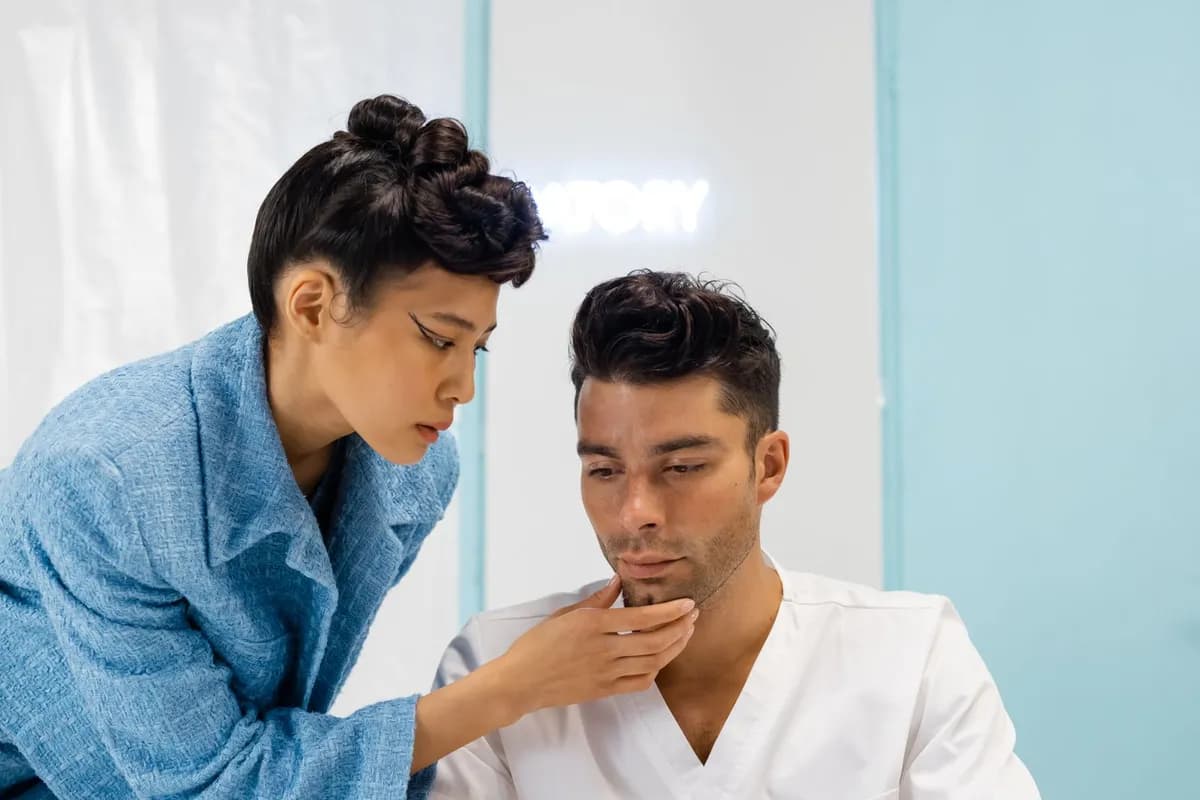
Photo: cottonbro studio / Pexels. A clinical scalp assessment at Carisma Hair Clinic includes imaging and density mapping to establish your Norwood stage accurately.
Which Stages Respond Best to Non-Surgical Treatment
This is the clinically important question — and the honest answer may be more encouraging than many men expect.
Men at Norwood stages I through IV are typically the best candidates for evidence-based medical therapy. At these stages, follicles are active, partially miniaturised, or in early decline — but they retain the biological capacity to respond to treatment. Clinical studies indicate that finasteride, which reduces DHT by approximately 71% in serum, can stabilise hair loss in up to 83% of men at the vertex and may produce visible regrowth in approximately two-thirds of men over two years, according to the original finasteride randomised controlled trial. Minoxidil, applied topically or taken at low oral doses, extends the anagen growth phase and evidence suggests measurable density improvement in 60–70% or more of users, as documented in clinical trials on minoxidil efficacy.
Regenerative approaches — including platelet-rich plasma (PRP) therapy and exosome treatments — add a third layer of intervention by delivering growth factors directly to the follicular environment. A meta-analysis of PRP for hair loss reports density improvements in the range of 25–40% over six months in appropriate candidates. Results may vary for each individual.
When these modalities are combined under a structured protocol and supported by scalp imaging to track response, the results at Norwood II–IV are meaningfully better than any single intervention alone.
At Norwood V through VII, the calculus changes. Follicles in the areas of established loss at these stages are typically dormant or terminally miniaturised. Medical therapy is unlikely to restore density to areas where follicles have been inactive for years. Surgical options — specifically hair transplantation — become the primary restoration tool, with medical therapy used to protect remaining follicles and slow further progression.
The clinical boundary is not perfectly sharp, and individual assessment always matters. But the overarching principle is consistent: earlier is better. The patients who see the most complete results from a non-surgical hair regrowth programme are those who present at Norwood II. Most men who come to Carisma Hair Clinic for the first time are already at Norwood III or IV. We can work effectively with both — but the advantage of earlier presentation is significant.
Why Most Men Wait Too Long
The five-to-ten year invisible window before visible thinning is the structural reason most men present later than is optimal. Hair loss does not announce itself. It accumulates in the follicle long before it appears in the mirror.
There is also a cultural dimension. Hair loss is common enough that it is normalised — and that normalisation can function as a reason to delay rather than an invitation to act. The internal reasoning tends to sound like: "It's not that bad yet." "I'll deal with it when it gets worse." "Maybe it will stop on its own."
In some cases, hair loss does stabilise temporarily without intervention. But the underlying DHT sensitivity does not resolve, and the genetic programme continues. What appears to be a plateau is often the natural variability in the rate of miniaturisation — not cessation. The vast majority of men with androgenetic alopecia who do not intervene will experience continued progression.
The men who seek assessment earliest — often prompted by research they have done quietly, late at night, without telling anyone — are the ones with the most options available. If this describes you, that instinct is worth acting on. Understanding where you are on the Norwood scale is the first step, and it requires a clinical assessment, not a self-diagnosis from photographs.
To understand what changes to look for before a formal assessment, see our guide on how to spot the early signs of balding.
A Factor Most Hair Loss Websites Don't Mention: Malta's UV Environment
Malta's geographic position in the central Mediterranean means it experiences some of the most intense ultraviolet radiation in Europe. The WHO classifies Malta's UV index as Very High (9–10) to Extreme (11+) during the summer months — conditions that are not common across most of the European contexts in which hair loss research has been conducted.
UV radiation is a recognised source of oxidative stress at the scalp level. Evidence suggests that chronic UV exposure can degrade the structural integrity of the hair shaft and contribute to a stress environment in the follicle. For men with existing androgenetic alopecia — where follicles are already under DHT-mediated stress — cumulative UV exposure may compound the follicular challenge, particularly on the crown and vertex areas, which receive the most direct sun exposure.
This does not mean sun exposure causes male pattern baldness. It means that in a climate like Malta's, men with genetic predisposition to hair loss may be operating in an environment that adds a layer of follicular stress that is rarely acknowledged in Northern European or American contexts. It is a practical reason to seek scalp imaging and density mapping from a clinic that understands the local environment.
Practical protective measures are simple: wearing a hat or cap during peak UV hours (11:00–15:00), using scalp-specific SPF where hair density is reduced, and considering UV exposure as part of an overall scalp health protocol — not just a cosmetic preference.
Treatment Options for Male Pattern Baldness in Malta
The treatment spectrum for androgenetic alopecia ranges from self-managed options to clinically supervised protocols. Understanding the hierarchy is useful.
Minoxidil (topical or low-dose oral) is the most accessible first-line option. Available without prescription in most pharmacies, the 5% topical formulation may produce measurable density increases in 60–70% or more of users. Results require consistent daily use and are maintained only with continued application. Low-dose oral minoxidil is an increasingly used alternative, supported by a growing clinical evidence base documented in topical and oral minoxidil studies, but requires medical supervision.
Finasteride is a prescription-only oral medication that can reduce circulating DHT by approximately 71%. A systematic review of finasteride for androgenetic alopecia confirms it can stabilise hair loss in the majority of men and may produce visible regrowth in two-thirds of patients at the vertex. It requires a consultation with a licensed medical professional and is not available over the counter. See our comprehensive guide on finasteride in Malta for access and prescribing context.
PRP (Platelet-Rich Plasma) involves drawing a small volume of the patient's own blood, concentrating the growth factors via centrifuge, and injecting this concentrate into the scalp at the follicular level. Clinical studies indicate density improvements in the range of 25–40% over six months in appropriate candidates. At Carisma Hair Clinic, PRP is delivered as part of a structured protocol under the supervision of Dr. Giovanni Scornavacca. Results may vary for each individual.
Exosome therapy represents the most recent addition to the non-surgical toolset. Exosomes are signalling molecules that carry growth and repair instructions between cells. Applied to the scalp in conjunction with microneedling or injection, they may promote a regenerative environment in the follicular unit. Evidence in this area is accumulating.
The Hair Reset Protocol at Carisma Hair Clinic combines these modalities in a structured 90-day programme — with baseline scalp imaging, staged interventions, and follow-up density mapping to document response. The programme accommodates a maximum of 12 patients per month.
For men evaluating the relative merits of medication — or trying to decide between finasteride and minoxidil — our treatment comparison guide covers the evidence in detail. You can also explore treatment options for a receding hairline and crown thinning treatment in Malta for stage-specific guidance. Understanding the underlying causes of male hair loss can also help clarify the right starting point for your situation.
Frequently Asked Questions About Male Pattern Baldness in Malta
What causes male pattern baldness?
Male pattern baldness is caused by a genetic sensitivity to dihydrotestosterone (DHT), a hormone produced when testosterone is converted by the enzyme 5-alpha reductase. In men with this genetic predisposition, DHT binds to receptors in scalp follicles and gradually shortens the hair growth cycle. Over successive cycles, hair shafts become thinner and shorter in a process called follicular miniaturisation. This is a biological process, not a lifestyle condition — stress, diet, and hygiene are not causes of androgenetic alopecia, though they may affect hair health more broadly.
At what age does male pattern baldness typically start in Malta?
The condition can begin as early as the late teens, though most men in Malta first notice changes in their twenties or thirties. Earlier onset does not necessarily predict more rapid progression. By age 50, approximately half of all men will have clinically meaningful hair loss; by age 70, the figure is approximately 70%. If you have a family history of early hair loss, a clinical baseline assessment in your twenties or early thirties gives you the most options.
Which Norwood stage is too late for non-surgical treatment?
There is no absolute cutoff, but the clinical consensus is that non-surgical treatment — including finasteride, minoxidil, and PRP — produces its best results at Norwood stages I through IV. At these stages, follicles retain the biological capacity to respond. At Norwood V through VII, follicles in the established loss areas are typically dormant. Medical therapy at late stages is used primarily to protect remaining hair rather than restore lost density. An in-person assessment at Carisma Hair Clinic provides the most accurate picture for your individual situation.
Is male pattern baldness inherited from the mother or father?
Both. The androgen receptor gene on the X chromosome — inherited from your mother — is the strongest single genetic predictor. But genome-wide research has identified more than 60 additional genetic loci associated with androgenetic alopecia, the majority of which are autosomal and come from both parents. A father's hair loss pattern is a significant independent predictor. If you have a family history of hair loss on either side, or both, your risk is elevated accordingly.
Can male pattern baldness be stopped without surgery?
In many cases, progression can be substantially slowed and, in men presenting early enough, partial regrowth may be achievable. Clinical studies indicate finasteride can stabilise loss in up to 83% of men over two years, while evidence suggests minoxidil may produce measurable density improvement in 60–70%+ of users. Combining both can produce better outcomes than either alone. PRP adds a regenerative layer. What none of these approaches can do is permanently reverse established loss or eliminate the genetic predisposition. Results are sustained only with continued treatment, and results may vary for each individual.
How much does male pattern baldness treatment cost in Malta?
Treatment costs at Carisma Hair Clinic vary depending on the protocol and stage of hair loss. A clinical consultation and scalp assessment is offered free of charge as the starting point. The Hair Reset Protocol — which combines PRP, prescription medication support, and scalp imaging — is a structured 90-day programme. Pricing is discussed during the initial consultation based on your individual presentation and treatment plan. We encourage you to book a free consultation to receive a personalised assessment and transparent cost breakdown before committing to any programme.
Is treatment for male pattern baldness safe?
The evidence-based treatments used at Carisma Hair Clinic — finasteride, minoxidil, and PRP — have established safety profiles documented across decades of clinical research. Finasteride carries a small risk of sexual side effects reported in a minority of clinical trial participants; this is discussed openly during consultation. Minoxidil is well tolerated topically; low-dose oral formulations require medical supervision. PRP uses your own blood plasma and carries no risk of allergic reaction to the treatment material itself. All treatments at Carisma Hair Clinic are delivered under the clinical supervision of Dr. Giovanni Scornavacca, ensuring that your personal health history and any contraindications are assessed before any protocol begins.
How do I access hair-loss medication in Malta — is it available over the counter?
Finasteride is a prescription-only medication in Malta. It cannot be purchased over the counter at a pharmacy. To access finasteride legally and safely, you require a consultation with a licensed medical professional who can assess your suitability, discuss the evidence, and issue a prescription. At Carisma Hair Clinic, this assessment is part of the initial consultation process. We do not recommend obtaining finasteride through online sources that do not require a medical consultation, as this bypasses the clinical safeguards that are important for your safety.
The Window Is Open Longer Than You Think — But It Does Not Stay Open
Most men who seek a hair loss consultation wish they had come earlier. Not because the options available to them are insufficient — but because having more follicles to work with produces more complete results.
If you are at Norwood I or II, you have time, and the treatments available to you carry strong evidence. If you are at Norwood III or IV, you are in the range where our patients most commonly present, and meaningful outcomes may be achievable. If you are further along, the conversation is different — but it is still worth having.
What does not serve you is waiting to see whether it gets worse. In androgenetic alopecia, the DHT mechanism does not pause. The invisible process continues whether or not you are paying attention to it.
Ready to Take Control of Your Hair Loss?
If you've been researching your options and want a clinical assessment rather than another generic recommendation, Carisma Hair Clinic offers a comprehensive diagnostic consultation — scalp imaging, density mapping, and a personalised protocol designed around your specific pattern of loss.
→ Book Your Free Hair Loss Consultation
Dr. Giovanni Scornavacca and the team at Carisma Hair Clinic are available at our St Julian's clinic.
About the Author
Dr. Giovanni Scornavacca is a hair restoration specialist with over 20 years of clinical experience, with advanced training at universities in Rome and Bologna. He leads the Hair Reset Protocol at Carisma Hair Clinic — Malta's most complete non-surgical hair regrowth programme. Dr. Scornavacca specialises in diagnosing and treating androgenetic alopecia, telogen effluvium, and complex hair loss presentations using a combination of PRP, exosome therapy, and prescription protocols tailored to each patient.
Medical Disclaimer: This article is for informational purposes only and does not constitute medical advice, diagnosis, or treatment recommendations. Results may vary for each individual. Always consult a qualified healthcare professional before starting any hair loss treatment. Dr. Giovanni Scornavacca and Carisma Hair Clinic are available for clinical consultation at our St Julian's, Malta clinic.
Written and reviewed by Dr. Giovanni Scornavacca, Carisma Hair Clinic. Published: 26 June 2026.
Ready to Take Action?
Book a free online consultation with Nurse Leticia to talk through your hair loss, then see Dr. Giovanni Scornavacca at the clinic for a personalised assessment and treatment plan.
Book a Free Consultation