Dr. Giovanni Scornavacca
26 June 2026 · 23 min read
Medically reviewed by Dr. Giovanni Scornavacca — Hair Restoration Specialist, Carisma Hair Clinic, St Julian's, Malta. 20+ years clinical experience, trained in Rome and Bologna.
Medically reviewed by Dr. Giovanni Scornavacca — Hair Restoration Specialist, Carisma Hair Clinic, St Julian's, Malta. 20+ years clinical experience.
Receding Hairline Treatment in Malta: What Actually Works
A receding hairline is one of the most visible early signs of androgenetic alopecia. For men in Norwood stages I–III with active follicles, non-surgical receding hairline treatment combining finasteride, minoxidil, and PRP can halt recession and may improve density. Follicles that have been dormant for many years are unlikely to recover without surgical intervention. Timing is the critical variable.
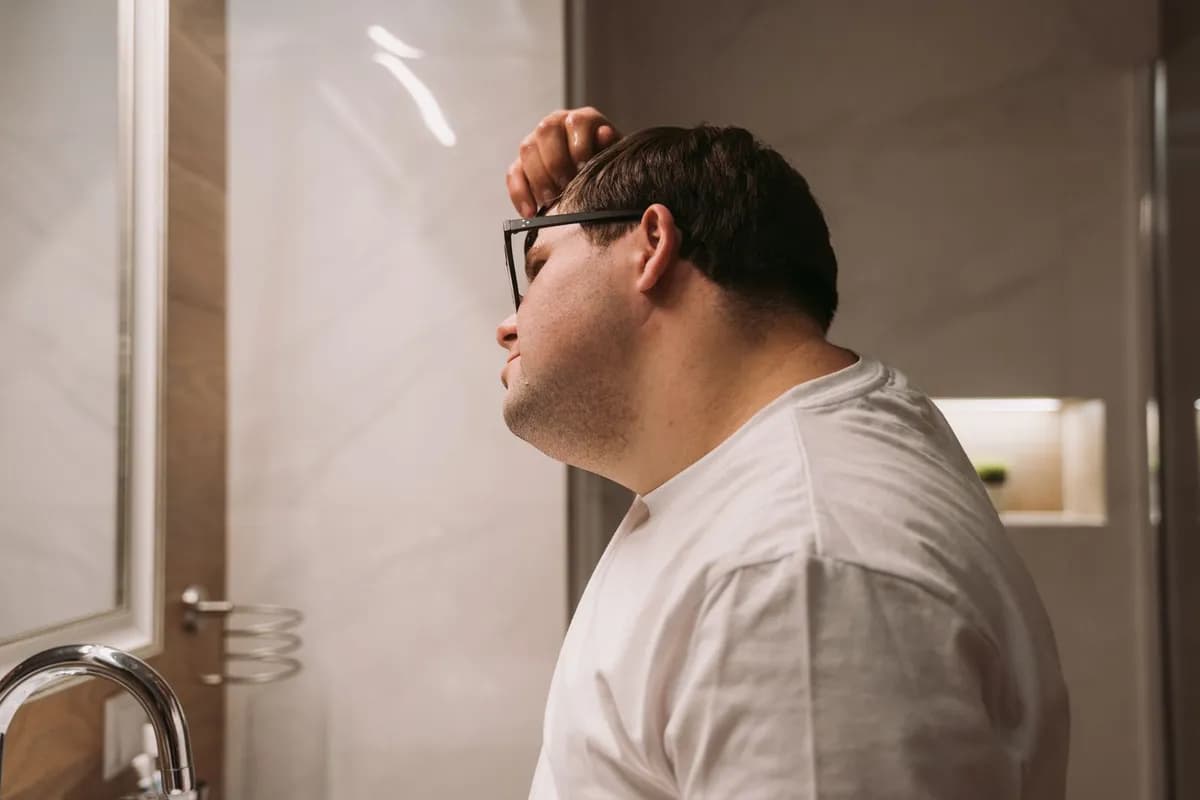
You probably noticed it first under certain lighting. A bathroom mirror at an angle you had not tried before. A photograph someone took without warning. The temples sitting slightly further back than you remembered, the corners of the hairline sharper, less full. Most men do not mention it to anyone for a long time. They look up things at night, read conflicting articles, find forums full of anecdotes and little clinical grounding, and arrive at the same unresolved question: is there anything that actually works?
The answer — specific, honest, and based on clinical evidence — is the subject of this article. What is a receding hairline. Why it happens where it does. What non-surgical treatment can and cannot achieve. And what the window of opportunity looks like — because evidence consistently shows that for hairline recession, timing is the single most important factor determining outcome.
The hair loss treatment Malta landscape has expanded considerably. Men no longer face a binary between accepting hair loss and committing to surgery. But not every treatment marketed for hairline recession is supported by meaningful clinical evidence, and understanding the difference matters before committing time, money, and expectation to any of them. Results may vary for each individual depending on the stage of loss, follicle health, and adherence to treatment.
Contents
- What a Receding Hairline Actually Is — and Why It Happens at the Temples
- The Honest Truth About Hairline Recovery: What Non-Surgical Treatment Can and Cannot Do
- Treatment Options for a Receding Hairline: The Evidence Hierarchy
- What Does Not Work for Hairline Recession
- The Transplant Crossroads: When Non-Surgical Treatment Is No Longer the Primary Option
- A Malta-Specific Note: Sun, Scalp Health, and Frontal Hair Loss
- Frequently Asked Questions About Receding Hairline Treatment in Malta
- Ready to Take Control of Your Hair Loss?
What a Receding Hairline Actually Is — and Why It Happens at the Temples
A receding hairline is the characteristic pattern of frontal hair loss in androgenetic alopecia (AGA), the most common form of hair loss in men. Rather than a uniform thinning across the scalp, AGA begins with a very specific geometry: the frontotemporal angles — the corners where the hairline meets the temples — start to recede, widening the forehead and changing the overall shape of the face frame.
This pattern is not accidental. It reflects the differential sensitivity of follicles across the scalp to dihydrotestosterone (DHT). DHT is a potent androgen produced when the enzyme 5-alpha reductase converts testosterone in the hair follicle itself. In men with a genetic predisposition to AGA, follicles in the frontotemporal zones carry androgen receptors that are highly reactive to DHT. When DHT binds to these receptors, it initiates a signalling cascade that shortens the hair's anagen (active growth) phase with each successive cycle. The result is progressive follicular miniaturisation: each new hair shaft emerges thinner, shorter, and lighter than the last, until eventually the follicle stops producing visible hair altogether. As the PMC androgenetic alopecia review notes, this DHT-mediated miniaturisation pathway is well-characterised and consistent across populations.
This process unfolds gradually — often over years to a decade before the change becomes noticeable in the mirror. By the time a man recognises a receding hairline, the miniaturisation process has usually been underway for significantly longer than the visual change implies. What you see is a late signal. The underlying follicular changes began much earlier.
Understanding this timeline is why an assessment — not just a visual inspection — matters. Scalp imaging can reveal the ratio of terminal (healthy) to miniaturised to inactive follicles in the hairline zone, which determines both what treatment can achieve and how urgently it should begin. You can learn more about where a receding hairline places you on the progression scale by reading our guide to your Norwood stage.
The Honest Truth About Hairline Recovery: What Non-Surgical Treatment Can and Cannot Do
This section needs to be direct, because too much content in this space overpromises.
What non-surgical treatment cannot do: Follicles that have been fully inactive for many years — producing no hair at all in a zone of slick-skin baldness — do not recover meaningfully with medical therapy. The biological infrastructure for regrowth (an intact dermal papilla, functional matrix cells) must still be present. Once a follicle has permanently miniaturised to the point of dormancy, topical or systemic medications cannot restore it. Surgery is the only option at that point.
What non-surgical receding hairline treatment can do: In men with an actively receding hairline — Norwood stages I through III, where the follicles in the recession zone are still producing some form of hair, even thin or miniaturised hair — the evidence for non-surgical treatment is genuinely strong. Clinical studies indicate that treatment at this stage can:
- Halt or significantly slow further recession by addressing the DHT driver
- Stabilise follicles in the transition zone before they become permanently dormant
- Produce measurable density improvement in areas where miniaturisation is partial rather than complete
- Delay or, for some men, may help remove the need for surgical intervention
The key phrase is "active follicles." The clinical data supporting finasteride for hairline stabilisation was drawn predominantly from men in earlier Norwood stages. Men presenting with fully bald hairline zones are not the same population as those with active follicles showing miniaturisation — and the outcomes differ accordingly.
This is why the most important decision you can make about a receding hairline is not which treatment to start, but when to be assessed. Follicles that are miniaturising today may be dormant in two or three years. The treatment window closes. It does not reopen without surgery.
Treatment Options for a Receding Hairline: The Evidence Hierarchy
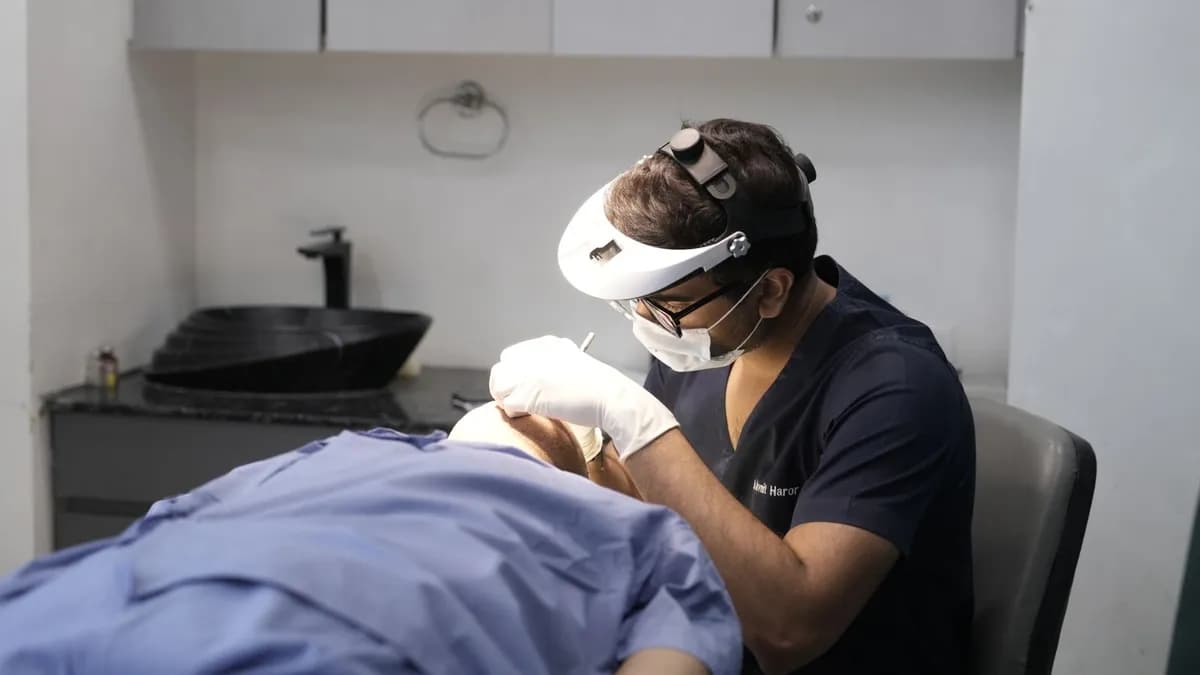
Photo by Dr. Haror's Wellness / Pexels. Clinical assessment is the starting point for effective, evidence-based treatment.
Hair-Loss Medication — Addressing the Hormonal Driver
Finasteride is the only oral medication with robust randomised controlled trial evidence for androgenetic alopecia. It works by selectively inhibiting type II 5-alpha reductase — the enzyme that converts testosterone to DHT — reducing serum DHT by approximately 71% at the 1 mg dose. This directly removes the hormonal signal that drives follicular miniaturisation.
The pivotal clinical data show that approximately 83% of men treated with finasteride saw no further hair loss at the vertex at two years, compared to continued loss in the placebo group. For the frontal area specifically, approximately 37% of men showed visible regrowth at one year — a figure consistent with the original finasteride RCT published in the NEJM. A more recent systematic review of finasteride outcomes confirms that frontal hairline response is lower than vertex response, reflecting the biological reality that the frontal hairline is more DHT-sensitive and more difficult to recover. Finasteride is most effective at halting recession at the hairline rather than dramatically reversing it — but halting recession in Norwood I–III is a clinically significant outcome.
Finasteride is a prescription-only medication in Malta. It must be assessed, prescribed, and monitored by a licensed healthcare professional. A small percentage of men (approximately 2–5% in clinical trials) report sexual side effects, which typically resolve after stopping the medication. Full detail on accessing finasteride, side effects, and what to expect is covered in our dedicated guide to finasteride in Malta.
Effects are maintained only with continued use. Hair loss resumes within months of stopping. Results may vary for each individual.
Topical Hair-Growth Treatment — Supporting Follicle Vitality
Minoxidil works through a different mechanism: it is a potassium channel opener that promotes vasodilation and increases blood flow to the dermal papilla. It also prolongs the anagen phase and shortens the telogen phase, increasing the number of follicles actively producing hair at any given time.
Evidence suggests that the majority of men using topical minoxidil — typically 60–70% or more — experience measurable improvement in hair density. The 5% formulation has been shown in randomised trials to produce approximately 45% more hair regrowth than the 2% formulation, as confirmed in published minoxidil efficacy studies. A further review of topical minoxidil outcomes underscores that consistent, long-term use is essential for sustained benefit. For hairline recession specifically, minoxidil is most useful as part of a combination approach: it supports follicle vitality and may improve density in miniaturising zones, complementing the DHT-suppression mechanism of finasteride.
Clinical evidence consistently shows that combining finasteride and minoxidil produces better results than either treatment alone. For men with an actively receding hairline, monotherapy is rarely the optimal approach. For a side-by-side comparison of both medications and how they interact, see our guide on finasteride vs minoxidil Malta.
PRP and Exosomes — Regenerative Support for Active Follicles
Platelet-rich plasma (PRP) therapy involves drawing a small volume of the patient's blood, centrifuging it to concentrate the growth factors, and injecting the resulting plasma into the scalp. The growth factors in PRP — PDGF, VEGF, IGF-1, and others — stimulate follicular activity, promote angiogenesis (new blood vessel formation) in the follicle environment, and support dermal papilla cell proliferation.
A meta-analysis of PRP for androgenetic alopecia reports a 25–40% improvement in density metrics over six months with PRP therapy. Critically, PRP appears to be particularly effective at the stage of active follicular miniaturisation — when the follicle is declining but has not yet become dormant. This makes it well suited to the early hairline recession stage, where regenerative stimulation can help rescue follicles that are at risk. Results may vary for each individual based on platelet concentration and baseline follicle health.
Exosomes — nano-sized vesicles derived from stem cells — represent a newer modality with emerging evidence for enhanced growth factor signalling and follicle reactivation. At Carisma Hair Clinic, both PRP and exosomes are available as components of a comprehensive treatment approach under the supervision of Dr. Giovanni Scornavacca.
The Hair Reset Protocol — Combining All Three Components
The Hair Reset Protocol at Carisma Hair Clinic is a structured 90-day programme that integrates medical treatment (finasteride and/or minoxidil), PRP, and monitoring through scalp imaging and density mapping. Treatment is adapted to each patient's presentation, Norwood stage, and the condition of the follicles in the recession zone as revealed by baseline imaging.
Intake is limited to 12 patients per month. This constraint is clinical — it reflects the level of individual attention that the protocol requires, not an artificial marketing device. Average density increase across the programme has measured 21–28% after 90 days by scalp imaging assessment.
What Does Not Work for Hairline Recession
Clarity on what not to spend money on is as useful as clarity on what works.
Topical serums addressing the hair strand, not the follicle. Products that coat, thicken, or strengthen the existing hair shaft do not alter the miniaturisation process. They address the symptom — thinner-looking hair — without touching the underlying biology. No topical serum without a pharmacologically active DHT-modulating ingredient can halt androgenetic alopecia.
Biotin supplementation in the absence of a confirmed deficiency. Biotin deficiency is rare in well-nourished adults and is not a common driver of male pattern hair loss. If a blood test confirms biotin deficiency, supplementing is appropriate and effective. For men without a deficiency, additional biotin supplementation produces no documented benefit for hairline recession.
Low-level laser therapy (LLLT) devices. While some devices (laser combs, laser caps) carry FDA clearance for hair loss, the evidence base is limited, effect sizes in published studies are modest, and the mechanism by which photobiomodulation affects hair follicle cycling is not well established. LLLT may have a supportive role alongside primary therapies, but it does not function as a standalone treatment for an actively receding hairline driven by DHT.
Waiting. This is perhaps the most common non-treatment, and in the context of androgenetic alopecia it is the most consequential one. The frontotemporal follicles lost to miniaturisation cannot be recovered without surgery. The follicles that are miniaturising right now — producing thin, vellus-like hair — can still be treated. The longer the wait, the fewer follicles remain in a recoverable state.
The Transplant Crossroads: When Non-Surgical Treatment Is No Longer the Primary Option
For men who have progressed to Norwood stages V–VII, or where scalp imaging confirms that the frontotemporal zone contains predominantly inactive follicles producing no measurable hair output, hair transplantation becomes the primary discussion. Non-surgical treatment can still play a role — stabilising the native hair in areas that remain active, slowing progression in adjacent zones, and post-transplant maintenance — but it cannot restore what surgical redistribution of donor follicles can achieve.
At Carisma Hair Clinic, we are transparent about this. If an assessment reveals that a patient's hairline recession is beyond the reach of medical therapy alone, we say so and refer to trusted surgical partners in Malta rather than continuing treatment that will not address the patient's actual concern. Honesty about treatment scope is part of the clinical standard we hold.
A significant proportion of patients at Carisma Hair Clinic come to us specifically for post-transplant care — PRP maintenance to support graft survival, and ongoing medical treatment for the native hair areas that were not transplanted. Transplant results last only as long as the surrounding native follicles are protected. Starting non-surgical receding hairline treatment before a transplant is needed is the clearest path to the best long-term outcome; but post-transplant management is equally important and often overlooked.
The time to seek assessment is before the decision becomes binary. If you have noticed your hairline changing in the last one to three years, the follicles you are seeing recession in may still be recoverable. Scalp imaging will confirm whether that is the case — with objective data rather than a visual guess.
For broader context on how male pattern baldness progresses and the full picture of what drives hair loss in men, those articles provide useful background before or after a clinical consultation.
A Malta-Specific Note: Sun, Scalp Health, and Frontal Hair Loss
Malta's UV index reaches 9–10 or higher in summer months — classified as Very High to Extreme by the WHO. Chronic UV exposure is a recognised source of oxidative stress at the follicular level. While UV radiation does not cause androgenetic alopecia, evidence suggests that oxidative stress at the scalp may accelerate follicular ageing and can contribute to the progression of already-miniaturising follicles.
This is particularly relevant at the frontal scalp, which receives the highest UV exposure during outdoor activity. Men with a receding hairline and significant sun exposure should consider scalp sun protection as a basic, evidence-consistent measure alongside any primary treatment programme. It is a low-cost, low-risk step that is relevant to the Maltese climate in a way that much of the clinical literature — written in Northern European or American contexts — does not address. The NHS hair loss guidance and the American Academy of Dermatology both highlight environmental factors as relevant to overall scalp health, complementing any clinical treatment programme.
Frequently Asked Questions About Receding Hairline Treatment in Malta
Can a receding hairline grow back without surgery?
In men with active follicular miniaturisation — where follicles are still producing some hair, even fine or thin — non-surgical receding hairline treatment can produce visible density improvement and halt further recession. Clinical studies indicate approximately 37% of men treated with finasteride see measurable frontal regrowth at one year. The key word is "active": follicles that have been fully dormant for years do not recover without surgical intervention. Scalp imaging distinguishes which scenario applies to you. Results may vary for each individual.
What is the most effective treatment for hairline recession?
No single treatment is most effective in isolation. The strongest clinical evidence supports combination therapy — finasteride (to suppress DHT), minoxidil (to promote follicle vitality and density), and PRP (to stimulate regenerative activity in miniaturising follicles). Each component addresses a different aspect of the miniaturisation process, and meta-analyses consistently show that combination approaches outperform monotherapy for hair density and coverage.
How early should I start treatment for a receding hairline?
As early as the change is noticed and confirmed as androgenetic in origin. The frontotemporal follicles lost to complete miniaturisation are not recovered by medical therapy. Every year of active recession represents follicles that may cross from recoverable to non-recoverable. Men in Norwood stages I–III have the most to gain from early receding hairline treatment — and the most to lose from delaying it.
How much does receding hairline treatment cost in Malta?
The cost of receding hairline treatment in Malta depends on the approach selected. Prescription finasteride typically costs between €20–€50 per month depending on the supplier and formulation. PRP sessions at a clinical level range from €150–€350 per session. The Hair Reset Protocol at Carisma Hair Clinic is a structured 90-day comprehensive programme — full pricing details and what is included are discussed at your initial free consultation. There are no generic online quotes that account for your specific stage, follicle condition, and treatment requirements. A personalised assessment is the only accurate basis for cost information.
Is receding hairline treatment safe? Are there side effects?
The core treatments — finasteride, minoxidil, and PRP — have well-characterised safety profiles established through decades of clinical use and RCT data. Finasteride carries a small risk of sexual side effects (approximately 2–5% of users in clinical trials), which typically resolve on discontinuation. Minoxidil can occasionally cause scalp irritation or unwanted facial hair growth. PRP uses the patient's own blood, significantly limiting allergic or systemic risk. As with any medical treatment, individual responses vary and treatment must be supervised by a qualified clinician. A full safety discussion, including your personal health history and any contraindications, forms part of every clinical consultation at Carisma Hair Clinic.
Does hair-loss medication stop a receding hairline from getting worse?
Clinical trial data show that approximately 83% of men treated with finasteride had no further hair loss at the vertex at two years. For the frontal hairline specifically, the stabilisation rate is lower than the vertex rate, but finasteride still significantly slows recession compared to placebo. It is best understood as a hairline stabiliser rather than a guaranteed hairline restorer, particularly for men in later stages. Results require continued use — hair loss resumes after stopping. Results may vary for each individual.
Is PRP effective for a receding hairline?
PRP is most effective when follicles are actively miniaturising rather than dormant. Published literature reports 25–40% improvement in density metrics over six months with PRP therapy in hair loss patients. At the frontotemporal zone — the site of hairline recession — PRP works best as a component of a combined programme rather than as a standalone treatment. It is particularly well-suited to the early stages of recession where regenerative stimulation can support follicles that are at risk.
When does a receding hairline require a hair transplant?
When scalp imaging confirms that the follicles in the hairline recession zone are predominantly inactive — producing no measurable hair output — medical therapy alone cannot restore that zone. Men presenting with advanced recession (Norwood V–VII) or long-established slick-skin baldness in the frontotemporal area are typically candidates for surgical consultation. Carisma Hair Clinic will be explicit about this at assessment and refers to trusted surgical partners in Malta when appropriate. Non-surgical treatment can still play an important post-transplant maintenance role.
Ready to Take Control of Your Hair Loss?
If you've been researching your options and want a clinical assessment rather than another generic recommendation, Carisma Hair Clinic offers a comprehensive diagnostic consultation — scalp imaging, density mapping, and a personalised protocol designed around your specific pattern of loss.
→ Book Your Free Hair Loss Consultation
Dr. Giovanni Scornavacca and the team at Carisma Hair Clinic are available at our St Julian's clinic.
About the Author
Dr. Giovanni Scornavacca is a hair restoration specialist with over 20 years of clinical experience, with advanced training at universities in Rome and Bologna. He leads the Hair Reset Protocol at Carisma Hair Clinic — Malta's most complete non-surgical hair regrowth programme. Dr. Scornavacca specialises in diagnosing and treating androgenetic alopecia, telogen effluvium, and complex hair loss presentations using a combination of PRP, exosome therapy, and prescription protocols tailored to each patient.
Medical Disclaimer: This article is for informational purposes only and does not constitute medical advice, diagnosis, or treatment recommendations. Results may vary for each individual. Always consult a qualified healthcare professional before starting any hair loss treatment. Finasteride is a prescription-only medication and must not be used or handled by women who are pregnant or may become pregnant. Dr. Giovanni Scornavacca and Carisma Hair Clinic are available for clinical consultation at our St Julian's, Malta clinic.
Written and reviewed by Dr. Giovanni Scornavacca, Carisma Hair Clinic. Published: 26 June 2026.
Ready to Take Action?
Book a free online consultation with Nurse Leticia to talk through your hair loss, then see Dr. Giovanni Scornavacca at the clinic for a personalised assessment and treatment plan.
Book a Free Consultation