Dr. Giovanni Scornavacca
26 June 2026 · 22 min read
Medically reviewed by Dr. Giovanni Scornavacca — Hair Restoration Specialist, Carisma Hair Clinic, St Julian's, Malta. 20+ years clinical experience, trained in Rome and Bologna.
Medically reviewed by Dr. Giovanni Scornavacca — Hair Restoration Specialist, Carisma Hair Clinic, St Julian's, Malta. 20+ years clinical experience.
Topical Hair-Loss Medication in Malta: Lower Systemic Risk, Same Hair Results?
Topical finasteride applies the same DHT-blocking mechanism as the oral pill — selectively inhibiting the enzyme that converts testosterone into the hormone that drives follicle miniaturisation — but delivers it directly to the scalp. A 2022 phase III clinical trial found topical and oral formulations produced statistically equivalent hair counts at 24 weeks, while serum DHT suppression was approximately 40% lower with the topical route. For men weighing the evidence on systemic side effects, this difference in absorption is clinically meaningful. Results may vary for each individual.
Contents
- What Topical Finasteride Is and How It Differs From the Pill
- The Evidence on Efficacy: Does It Actually Work?
- The Side Effect Profile: What the Clinical Data Shows
- Who Topical Finasteride Is Most Likely to Suit
- Compounded Topical Finasteride: Concentrations and What to Expect
- Topical vs Oral Finasteride: Which Is the Right Choice?
- Accessing Topical Finasteride in Malta
- Frequently Asked Questions About Topical Finasteride in Malta
Somewhere between reading about finasteride and deciding to take it, most men hit a wall. The mechanism makes sense. The evidence is credible. But the question — what if I'm one of the small percentage who experience side effects? — sits in the background and stalls a decision that could be worth making.
Topical finasteride exists, in part, as a clinical answer to that question. It is not a workaround or an unproven alternative. It is the same active molecule, the same biological target, and in the largest head-to-head trial to date, the same measurable hair outcomes. The difference lies in how the drug travels through the body — or more precisely, how much less of it does.
For men researching hair loss treatment Malta options who have paused on oral finasteride specifically because of concerns about systemic exposure, this article sets out what the current evidence actually says, what topical finasteride involves in practice, and how it is prescribed and accessed in Malta through a specialist clinic.
The evidence here is more recent than most online sources reflect. If you have read that topical finasteride is experimental or lacks clinical backing, that assessment is now out of date.
What Topical Hair-Loss Medication Is and How It Differs From the Pill
Oral finasteride (1 mg, marketed as Propecia) has been the standard medical treatment for androgenetic alopecia in men since its approval in the late 1990s. It is taken daily, absorbed through the gastrointestinal tract, circulates systemically, and inhibits type II 5-alpha reductase throughout the body — including in tissues well beyond the scalp.
Topical finasteride uses the same active ingredient but applies it as a solution, spray, or gel directly to the scalp. The goal is to concentrate the drug where the follicles are, while minimising the amount that enters systemic circulation.
The pharmacokinetic data supports this intention. A 2022 phase III randomised controlled trial published in peer-reviewed literature found that maximum plasma concentration with topical finasteride was more than 100-fold lower than with the oral formulation. In practical terms: the scalp receives a therapeutically relevant drug concentration; the rest of the body receives a fraction of what the oral pill would deliver.
This matters because finasteride's reported side effects — which affect a minority of users but are the primary reason men hesitate — arise from systemic DHT suppression in tissues outside the scalp. Reducing systemic absorption is therefore not merely a cosmetic reformulation choice. It is a pharmacologically rational approach to improving the benefit-to-risk ratio. According to a systematic review on androgenetic alopecia treatment published in the National Institutes of Health literature, DHT-mediated follicle miniaturisation is the primary driver of male pattern hair loss — making localised DHT suppression at the scalp a clinically sound target.
Topical finasteride is currently available as a compounded formulation in Malta, prescribed by specialist hair loss physicians. It is not routinely stocked at standard community pharmacies and requires a specialist prescription — a point addressed in more detail below.
The Evidence on Efficacy: Does It Actually Work?
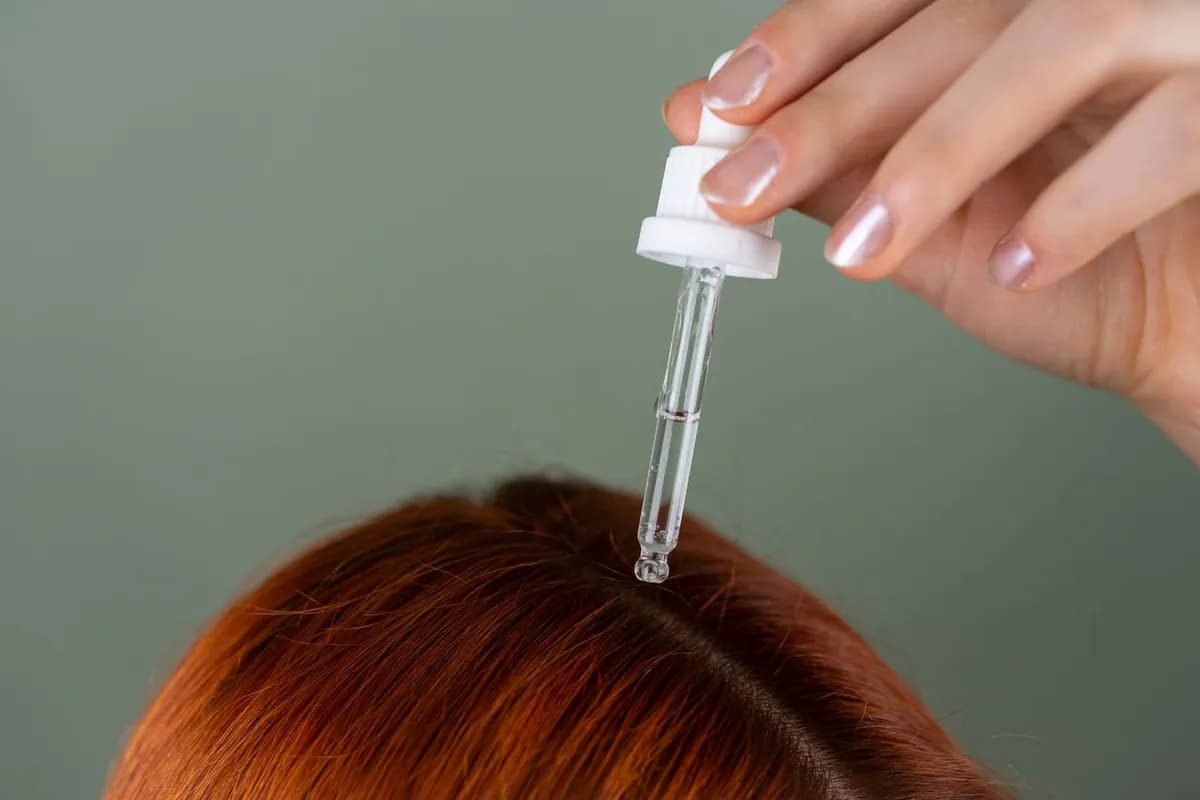
Topical finasteride is applied directly to the scalp, allowing localised DHT suppression with reduced systemic absorption. Photo: Beyzanur K.
The 2022 phase III RCT remains the most definitive head-to-head comparison available. The trial randomised men to receive topical finasteride spray, oral finasteride 1 mg, or placebo, and measured hair counts in a target area at 24 weeks.
The results on efficacy were close to identical between the two active arms:
- Topical finasteride: +20.2 hairs per target area at week 24
- Oral finasteride: +21.1 hairs per target area at week 24
- Placebo: measurably lower hair counts
The difference between topical and oral was not statistically significant. By the primary efficacy measure — hair count in a defined scalp region — both formulations performed equivalently. Clinical studies indicate this equivalence holds across early-to-moderate androgenetic alopecia presentations.
Where they diverged meaningfully was in systemic DHT suppression:
- Topical finasteride reduced serum DHT by approximately 34.6%
- Oral finasteride reduced serum DHT by approximately 55.6%
The oral pill suppressed systemic DHT roughly 40% more than the topical formulation. The scalp, however, experienced comparable levels of local DHT inhibition in both groups — which is why the hair outcomes were equivalent despite the difference in systemic exposure.
The original finasteride RCT that established oral finasteride's efficacy for androgenetic alopecia demonstrated significant hair count improvements over 12 months — a benchmark the topical formulation now credibly approaches at the 24-week mark.
Two important caveats apply. The 24-week timeframe, while meaningful, does not yet represent the multi-year long-term efficacy data that exists for oral finasteride. Men with more advanced androgenetic alopecia — particularly at Norwood stages V–VII — may require a level of DHT suppression that the topical route is less reliably able to achieve. Individual absorption through the scalp also varies based on skin condition, formulation, and application technique. Consistent, correct application matters more with topical delivery than with a standard oral tablet.
For men in the earlier and mid stages of hair loss who are good candidates for medical treatment, evidence suggests the available data is sufficiently robust to consider topical finasteride a clinically credible first-line option rather than a compromise.
The Side Effect Profile: What the Clinical Data Shows
This is where the topical formulation generates the most interest — and where it is important to be precise rather than reassuring.
In the 2022 phase III trial, sexual adverse events were reported as follows:
- Topical finasteride: 2.8%
- Oral finasteride: 4.8%
- Placebo: 3.3%
The absolute difference between topical and oral was approximately 2 percentage points. The topical group's rate was, notably, marginally lower even than the placebo group — a finding that reflects how much the nocebo effect (symptoms driven by expectation) can influence reporting in this category.
A 2024 pharmacovigilance study examining post-market safety signals confirmed lower rates of sexual and neuropsychiatric adverse event reporting for topical finasteride compared with the oral formulation. This is consistent with the mechanistic rationale: systemic side effects correlate with systemic drug exposure, and topical delivery substantially reduces that exposure.
To state the evidence accurately: topical finasteride may be associated with a lower rate of sexual side effects than oral finasteride in available clinical trial data. The absolute rates in both cases are low. The oral form has a longer post-market safety record spanning over two decades; the topical form has an emerging but growing evidence base.
A small number of men taking oral finasteride have reported side effects persisting after discontinuation — a phenomenon sometimes referred to in the literature. The evidence on this remains actively debated, and the medical understanding of it is still developing. Men with specific concerns about this should raise them directly with a prescribing physician before starting any finasteride formulation. It is a legitimate clinical question that deserves a considered, personalised answer.
To understand the broader side effect landscape for oral finasteride in detail, the finasteride side effects Malta article covers the data on each reported category, including reversibility on discontinuation.
Who Topical Hair-Loss Medication Is Most Likely to Suit
Topical finasteride is a prescription-only compounded medicine in Malta, available through specialist hair loss clinics. Photo: World Sikh Organization of Canada
Topical finasteride is not universally preferable to the oral formulation. It suits specific patient profiles, and prescribing decisions should reflect individual circumstances rather than a default assumption that lower systemic exposure is always the priority.
Men with Norwood I–IV hair loss who are ready to begin medical treatment but are concerned about systemic exposure. This is the clearest indication. The efficacy data supports topical finasteride for early-to-moderate androgenetic alopecia. If the primary barrier to starting treatment is concern about systemic side effects, topical delivery addresses that concern with clinical evidence behind it.
Men considering a combination protocol. Topical finasteride and minoxidil are increasingly prescribed together — either as separate applications or as a single compounded formulation combining both actives in one vehicle. For men who want a streamlined daily routine alongside superior efficacy to monotherapy, the combination approach is well-supported by evidence. Clinical studies indicate that combining DHT blockade with minoxidil produces better results than either agent alone.
Men who have previously tried oral finasteride and experienced tolerable but unwanted side effects. Switching to the topical formulation under medical supervision may reduce systemic exposure sufficiently to resolve the issue, while maintaining therapeutic effect on the scalp. This should only be done with clinical guidance, not self-managed.
Men who are not well-suited to topical finasteride include those with very advanced hair loss (Norwood V–VII) where the evidence base for topical delivery at that severity is thinner, and those with scalp conditions — significant dermatitis, psoriasis, or active inflammation — that may alter drug absorption unpredictably.
Compounded Topical Hair-Loss Medication: Concentrations and What to Expect
Topical finasteride in Malta is prescribed as a compounded preparation — a pharmacist-prepared formulation made to a specific prescription rather than a mass-manufactured product. This is the standard route in most countries where a licensed topical finasteride product is not yet commercially available as a standalone branded item.
Typical concentrations range from 0.1% to 0.5% finasteride in a carrier solution or gel base, applied to the affected scalp areas once daily. Concentrations vary based on individual patient profile and prescribing physician preference; there is no single universally standardised dosing protocol for compounded topical finasteride. This underscores why prescribing should come from a physician with specific expertise in hair loss medicine rather than a general practitioner unfamiliar with the formulation landscape.
Application involves parting the hair in the area of concern and applying a measured dose of solution directly to the scalp skin, not to the hair shaft. It should be left to dry before contact with water or other products. Consistency of application matters considerably — the clinical outcomes in trials assume daily use with correct technique.
In practice, some men find topical finasteride easier to incorporate into a routine than a daily oral tablet; others find the application step less convenient. Compliance data varies, and the physician prescribing the formulation should walk through application technique at the consultation stage.
Because compounded preparations are made to prescription specifications, they are not available over the counter in Malta and cannot be sourced from standard community pharmacies without a specific clinical prescription. The prescribing physician at a specialist clinic coordinates both the prescription and access to an appropriate compounding pharmacy.
Topical vs Oral Hair-Loss Medication: Which Is the Right Choice?
The honest clinical answer is that this depends on the individual, and there is not a single correct answer that applies universally.
Oral finasteride has a 25-year post-market safety record, a large volume of long-term efficacy data, and is the formulation covered by the majority of clinical guidelines. It is the better-evidenced choice from a quantity-of-data perspective, and for men with no specific concern about systemic exposure, it remains a well-supported first option.
Topical finasteride has a smaller but methodologically credible evidence base, a pharmacokinetically rational rationale for lower side effect risk, and a phase III trial showing equivalent short-term efficacy. For men for whom systemic DHT suppression is a specific concern, or who want the lowest-possible systemic drug exposure while maintaining therapeutic benefit at the follicle level, the case for topical is clinically defensible.
What should not happen is a decision made in isolation, without a structured assessment of hair loss pattern, medical history, and treatment goals. A man with Norwood III diffuse thinning and a strong family history of male pattern baldness, who has been researching finasteride for months but has not started because of side effect concerns, is a different clinical case from a man with Norwood V loss who needs maximum DHT suppression to slow what is already advanced.
For a full comparison between the two main medical options including efficacy, mechanism, and who suits each, the finasteride vs minoxidil Malta article covers the decision framework in detail. If you are specifically considering oral finasteride available in Malta as a starting point, that article covers access, prescribing, and what to expect.
Accessing Topical Hair-Loss Medication in Malta
Topical finasteride requires a prescription from a licensed medical professional. It is not available without one, and it is not stocked in standard community pharmacies in Malta without a specialist referral.
The practical route to accessing it is through a specialist hair loss clinic where the prescribing physician can assess the pattern of hair loss, confirm the diagnosis of androgenetic alopecia, review relevant medical history, and write a prescription for the specific compounded formulation appropriate for the patient. The clinic then coordinates with a compounding pharmacy to supply the preparation.
This is not a bureaucratic inconvenience. The prescribing process also generates a clinical baseline — scalp imaging, hair density measurement, and a documented starting point — that makes it possible to assess whether the treatment is working at follow-up. Starting topical finasteride without a baseline assessment means there is no objective way to determine, at three or six months, whether the treatment is producing results.
At Carisma Hair Clinic in St Julian's, topical finasteride may be included as part of the Hair Reset Protocol depending on the patient's diagnostic profile. The protocol includes scalp imaging and density mapping at baseline and follow-up, allowing measurable comparison rather than a subjective sense of whether hair looks different. The prescribing decision — whether topical, oral, or a combined approach — is made after reviewing the full clinical picture, not as a one-size-fits-all recommendation.
For additional context on how PRP hair treatment Malta fits into a complete protocol alongside medical therapy, the treatments page outlines the full range of available options.
Frequently Asked Questions About Topical Hair-Loss Medication in Malta
Is topical hair-loss medication available in Malta?
Yes. Topical finasteride is available in Malta as a compounded prescription preparation. It is not stocked over the counter at standard pharmacies and requires a prescription from a licensed physician — typically a specialist in hair loss or dermatology. At Carisma Hair Clinic, topical finasteride may be prescribed as part of a tailored treatment protocol following a clinical assessment of your hair loss pattern and medical history.
Does topical hair-loss medication work as well as oral hair-loss medication?
Based on the most rigorous head-to-head evidence available — a 2022 phase III randomised controlled trial — topical and oral finasteride produced statistically equivalent hair counts at 24 weeks (+20.2 hairs vs +21.1 hairs in the target area). The primary difference is in systemic DHT suppression: topical suppressed serum DHT by approximately 34.6%, compared to 55.6% for the oral formulation. For early-to-moderate hair loss, this may translate to comparable scalp outcomes with lower systemic drug exposure. Results may vary for each individual.
Does topical hair-loss medication have fewer side effects than the pill?
Clinical trial data suggest it can. In the 2022 phase III trial, sexual adverse events were reported in 2.8% of the topical group compared to 4.8% in the oral group — an approximately 40% relative reduction. Post-market pharmacovigilance studies have similarly shown lower adverse event signals for topical finasteride. The mechanism is straightforward: systemic side effects correlate with systemic exposure, and topical delivery substantially reduces that exposure. However, as with any medication, individual responses vary, and any new symptoms during treatment should be discussed with the prescribing physician.
How much does topical hair-loss medication cost in Malta?
The cost of compounded topical finasteride in Malta varies depending on the concentration, formulation volume, and whether it is prescribed as a standalone preparation or combined with minoxidil. A clinical consultation is required before prescribing, which includes scalp imaging and density assessment. Carisma Hair Clinic offers a free initial hair loss consultation — contact the clinic directly for current pricing on the compounded preparation relevant to your protocol.
What concentration of topical hair-loss medication is typically prescribed?
Compounded topical finasteride is typically formulated at concentrations between 0.1% and 0.5% in a solution or gel base. The appropriate concentration and volume are determined by the prescribing physician based on the extent and pattern of hair loss, individual response, and whether the formulation is combined with other actives such as minoxidil. There is no single universally standardised concentration, which is one reason why specialist prescribing rather than self-sourcing is important.
Can topical hair-loss medication be combined with topical hair-growth treatment?
Yes — and in many clinical protocols, it is. Topical finasteride and minoxidil are frequently prescribed together, either as separate products or as a single compounded formulation combining both in one vehicle. The combination addresses two complementary mechanisms: finasteride reduces DHT-driven follicle miniaturisation, while minoxidil extends the active growth phase and increases blood supply to the follicle. Evidence suggests that combination therapy produces greater improvements in hair density and global assessment than either agent used alone. Whether combination therapy is appropriate for a specific patient is a clinical decision based on the full assessment picture.
Do I need a prescription for topical hair-loss medication in Malta?
Yes. Topical finasteride is a prescription-only medication in Malta. It cannot be purchased over the counter or self-sourced without a valid prescription from a licensed medical professional. The compounded formulation must be prepared by a registered pharmacy to the prescribing physician's specifications. This makes specialist clinic access the only legitimate route for obtaining topical finasteride in Malta — a process that also ensures the treatment is appropriate for your specific pattern of loss.
Ready to Take Control of Your Hair Loss?
If you've been researching your options and want a clinical assessment rather than another generic recommendation, Carisma Hair Clinic offers a comprehensive diagnostic consultation — scalp imaging, density mapping, and a personalised protocol designed around your specific pattern of loss.
→ Book Your Free Hair Loss Consultation
Dr. Giovanni Scornavacca and the team at Carisma Hair Clinic are available at our St Julian's clinic.
About the Author
Dr. Giovanni Scornavacca is a hair restoration specialist with over 20 years of clinical experience, with advanced training at universities in Rome and Bologna. He leads the Hair Reset Protocol at Carisma Hair Clinic — Malta's most complete non-surgical hair regrowth programme. Dr. Scornavacca specialises in diagnosing and treating androgenetic alopecia, telogen effluvium, and complex hair loss presentations using a combination of PRP, exosome therapy, and prescription protocols tailored to each patient.
Medical Disclaimer: This article is for informational purposes only and does not constitute medical advice, diagnosis, or treatment recommendations. Results may vary for each individual. Always consult a qualified healthcare professional before starting any hair loss treatment. Topical finasteride is a prescription-only medication — it must not be started, stopped, or changed without medical supervision. Dr. Giovanni Scornavacca and Carisma Hair Clinic are available for clinical consultation at our St Julian's, Malta clinic.
Written and reviewed by Dr. Giovanni Scornavacca, Carisma Hair Clinic. Published: 26 June 2026.
Ready to Take Action?
Book a free online consultation with Nurse Leticia to talk through your hair loss, then see Dr. Giovanni Scornavacca at the clinic for a personalised assessment and treatment plan.
Book a Free Consultation