
Dr. Giovanni Scornavacca
26 June 2026 · 20 min read
Medically reviewed by Dr. Giovanni Scornavacca — Hair Restoration Specialist, Carisma Hair Clinic, St Julian's, Malta. 20+ years clinical experience, trained in Rome and Bologna.
Medically reviewed by Dr. Giovanni Scornavacca — Hair Restoration Specialist, Carisma Hair Clinic, St Julian's, Malta. 20+ years clinical experience.
Hair-Loss Medication Side Effects Malta: What the Evidence Actually Shows
Finasteride's side effect profile is one of the most studied of any long-term medication on the market. Clinical trials involving tens of thousands of men over decades produce a consistent answer: serious finasteride side effects occur in a small minority of users. The headline figure from phase III trials is approximately 2–5% for sexual adverse events. Yet spend twenty minutes on a finasteride forum and you will encounter something that reads more like a public health emergency.
Both things can be true. The clinical data and the anecdotal accounts are not measuring the same thing — and understanding that gap is the most useful thing you can do before making a decision about this medication. Results may vary for each individual based on health history, dosage, and the quality of clinical monitoring in place.
This article presents what the clinical evidence shows, what remains genuinely uncertain, and what structured medical oversight — rather than unmonitored online purchasing — changes about your risk picture.
Structured clinical oversight changes the risk profile of finasteride significantly. Photo: RDNE Stock project / Pexels
Contents
- What the Clinical Trials Actually Show About Finasteride Side Effects
- The Nocebo Effect: When Reading About Side Effects Causes Them
- Reversibility: What Happens When You Stop
- Why Unmonitored Finasteride Is a Different Proposition
- The Information Landscape on Finasteride Forums
- How a Structured Monitoring Protocol Works at Carisma Hair Clinic
- Frequently Asked Questions About Finasteride Side Effects in Malta
What the Clinical Trials Actually Show About Hair-Loss Medication Side Effects
The reference data on finasteride side effects come from the pivotal registration trials conducted for Propecia (1 mg finasteride) — randomised, placebo-controlled studies enrolling thousands of men over one and two years. These are the same trials that informed regulatory approval across the EU, including Malta's Medicines Authority.
In those trials, sexual adverse events — defined as decreased libido, erectile dysfunction, and ejaculation disorders — occurred in approximately 2–5% of finasteride-treated men. The most frequently cited figure from a phase III comparison places oral finasteride's sexual adverse event rate at 4.8%, compared to 3.3% in the placebo arm. That 1.5 percentage point difference is real and should not be dismissed. But it is also a far remove from the figures that circulate in online hair loss communities.
According to the pivotal finasteride registration trial data, the vast majority of men — roughly 95 out of 100 — experience no sexual side effects at all during treatment. That figure is not presented to minimise the experience of those who are affected. It is presented because inaccurate risk perception is itself a documented clinical problem, as discussed below.
A systematic review of finasteride clinical evidence confirms that clinical studies indicate the benefit-to-risk profile of supervised finasteride prescribing is favourable for the majority of men with androgenetic alopecia, particularly when baseline assessment and structured monitoring are in place.
Finasteride also reduces serum DHT by approximately 71% and scalp DHT by approximately 64% at the standard 1 mg dose. This suppression is what arrests follicular miniaturisation and, in around two-thirds of men, clinical studies indicate measurable regrowth at the vertex — making it one of the most effective non-surgical options currently available as part of a structured hair loss treatment Malta programme.
The Nocebo Effect: When Reading About Side Effects Causes Them
Photo: Tima Miroshnichenko / Pexels

This section belongs near the start of the discussion, because it changes how you should read everything that follows.
The nocebo effect is the clinical term for a well-documented phenomenon: patients who are told about potential side effects experience those side effects at higher rates than patients who are not told — even when the substance being administered is pharmacologically inert. It is the mirror image of the placebo effect, and it is not a theory. Evidence suggests it has been measured specifically in finasteride studies.
One published study examining finasteride 5 mg (used for benign prostatic hyperplasia, a higher dose than the 1 mg used for hair loss) compared two groups: men who received standard side effect counselling before treatment and men who were not proactively warned. The group that received counselling reported significantly higher rates of sexual dysfunction — even though the medication was the same.
What does this mean practically? It does not mean that finasteride side effects are imaginary. It means that a man who spends two hours reading accounts of adverse reactions before starting treatment is operating under conditions that actively can increase his statistical risk of experiencing the side effects he has just read about. The forum posts are not neutral information — they are, in a measurable sense, an intervention.
This is one reason why prescribing finasteride with a brief, honest, calibrated discussion of actual risk — rather than either dismissing concerns or amplifying them — is part of good clinical practice. It is also why buying finasteride online, without any pre-treatment consultation, leaves men without the contextual framing that can affect outcomes.
Reversibility: What Happens When You Stop
Most men who experience finasteride side effects find they may resolve after stopping the medication. This is consistent across the clinical data and is the standard position in the prescribing information.
The standard wording from the product literature states that adverse sexual effects "typically resolve after discontinuation of treatment." "Typically" is doing meaningful work in that sentence — it is not a guarantee.
A small number of patients have reported that certain side effects, particularly decreased libido and erectile dysfunction, persisted beyond discontinuation. This is the phenomenon referred to as post-finasteride syndrome, discussed in the FAQ section below. It is a genuinely contested area of medicine. The FDA added a warning about potential persistent effects to finasteride's label in 2012. The prevalence of persistent effects is not established by controlled data, and spontaneous pharmacovigilance reports — where affected individuals self-report to regulatory bodies — cannot be used to calculate a reliable rate. The phenomenon exists in the published literature; its frequency does not.
For the purposes of clinical decision-making: if you start finasteride and experience a side effect, stopping the medication is the standard first response. In the large majority of cases, that can resolve the issue. If it does not, that is a conversation to have with your prescribing physician — not a situation to manage alone, and not a situation to arrive at having started treatment without a baseline assessment.
Why Unmonitored Hair-Loss Medication Is a Different Proposition
Photo: Ketut Subiyanto / Pexels

Finasteride is a prescription-only medicine in Malta and across the EU. That is not administrative inconvenience — it reflects a regulatory judgement that this medication requires professional oversight before and during use.
Several online providers now offer finasteride through abbreviated questionnaire-based processes without face-to-face assessment. The medication itself may be genuine. What is absent is everything that changes the risk profile:
No baseline assessment. Before starting finasteride, a structured consultation should establish whether androgenetic alopecia is the correct diagnosis, whether any pre-existing conditions interact with DHT suppression, whether the patient is taking other medications, and what baseline sexual function looks like before treatment begins. Without a baseline, neither the patient nor any future clinician can determine whether a reported change is attributable to finasteride or to another cause entirely.
No monitored follow-up. A responsible prescribing protocol includes review at three and six months. This catches side effects early, confirms the medication is working, and allows dose adjustment or formulation change if indicated. A man managing finasteride from an online subscription has no structured pathway for any of this.
No informed-consent conversation. The nocebo data above makes clear that how side effect information is communicated can affect outcomes. A printed leaflet or a terms-and-conditions checkbox is not a clinical conversation.
The full guide to getting finasteride in Malta covers access, prescribing, and what to expect from a legitimate consultation. It is worth reading before making any purchasing decision.
The Information Landscape on Hair-Loss Forums
There is a structural problem with online forums that is worth naming directly.
Forums aggregate the experiences of people who found the forum. People who took finasteride uneventfully for five years and maintained their hair rarely seek out a finasteride forum to report that. People who had a difficult experience, or who are currently having one and searching for answers, do. The resulting information environment is not a random sample of finasteride users — it is a self-selected sample of the subset who are having problems.
This is not unique to finasteride. It applies to virtually any pharmaceutical that has a community of people discussing it online. But finasteride generates particularly intense forum activity, partly because of the sexual side effect concern, and partly because the demographic — men who are privately distressed about hair loss but reluctant to discuss it with anyone they know — is exactly the demographic most likely to turn to anonymous online communities for reassurance.
Evidence suggests that reading forums before your consultation gives you a vivid picture of the worst-case experiences. It will not give you an accurate picture of what a monitored, baseline-assessed patient in St Julian's is statistically likely to experience.
A comprehensive androgenetic alopecia evidence review notes that the risk profile under supervised clinical conditions is meaningfully different from the anecdotal accounts circulating in online communities — a finding that underscores why the prescribing context matters as much as the molecule itself.
How a Structured Monitoring Protocol Works at Carisma Hair Clinic
Photo: Dr. Haror's Wellness / Pexels
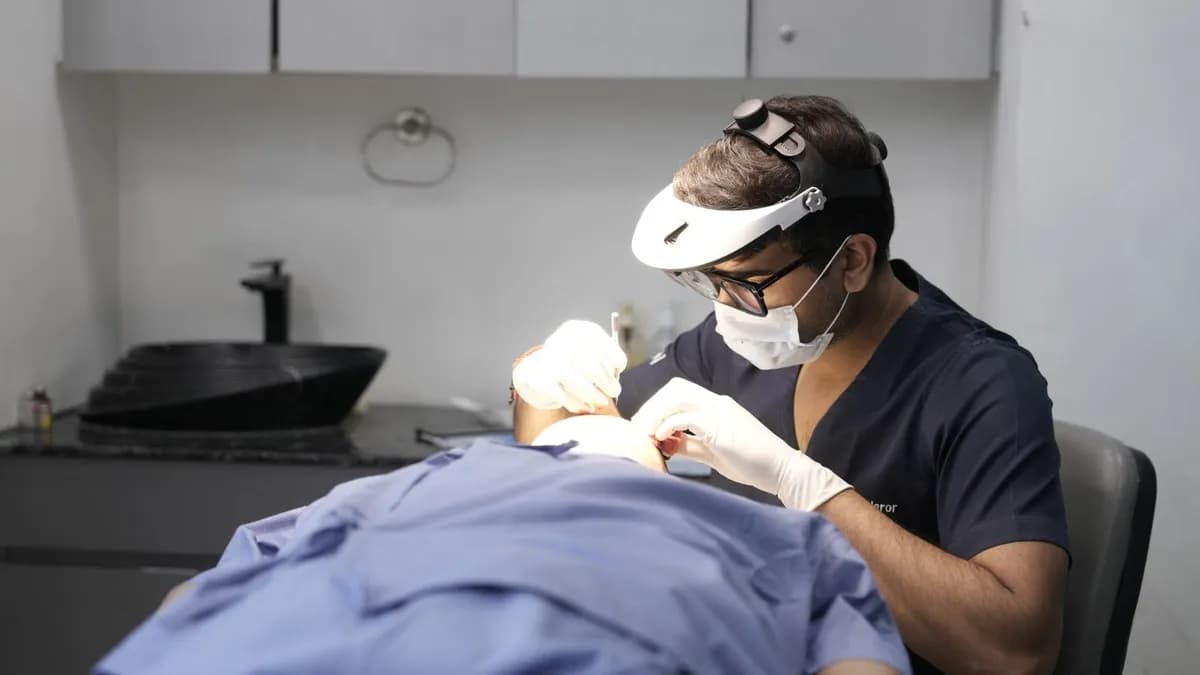
When finasteride is prescribed through Carisma Hair Clinic under Dr. Giovanni Scornavacca, the process follows a structured protocol rather than a prescription issued in isolation.
Initial consultation: Scalp imaging and density mapping confirm the diagnosis and stage of androgenetic alopecia. Medical history, current medications, and baseline health markers are reviewed. The side effect profile is discussed honestly — not amplified, not minimised. A baseline assessment of sexual function is documented.
Three-month review: Hair density is remeasured. Any reported changes since starting treatment are assessed in context of the established baseline. If a side effect is reported, its onset, severity, and timeline are evaluated — and the option of switching to topical finasteride (which achieves comparable hair counts while reducing systemic DHT suppression by approximately 40%) is discussed if appropriate. You can read more about that option under our treatment options.
Six-month review: The majority of treatment response data is visible by this point. Photographic documentation at scalp imaging allows objective comparison with the baseline scan. Ongoing monitoring decisions are made with reference to actual measured outcomes, not patient impression alone.
This is what monitored prescribing looks like. It is a materially different proposition from ordering a medication online because a forum recommended it. If you are comparing your full treatment options before deciding, the monitoring structure attached to each option is as relevant as the medication's clinical profile.
Frequently Asked Questions About Hair-Loss Medication Side Effects Malta
What percentage of men experience side effects from hair-loss medication?
In phase III clinical trials for 1 mg finasteride (Propecia), sexual adverse events — including decreased libido, erectile dysfunction, and ejaculation disorders — occurred in approximately 4.8% of men in the finasteride group versus 3.3% in the placebo group. The attributable difference is roughly 1.5 percentage points. Other studies place the overall sexual adverse event rate between 2% and 5%. The large majority of men — approximately 95% or more — experience no sexual side effects during treatment. Results may vary for each individual based on health history and clinical context.
Are hair-loss medication side effects permanent?
For most men who experience side effects, they may resolve after stopping finasteride. Clinical prescribing information states that adverse sexual effects "typically resolve after discontinuation of treatment." A small subset of patients has reported effects that persisted beyond stopping — this is the subject of ongoing research known as post-finasteride syndrome. If you experience any side effect on finasteride, report it to your prescribing physician rather than managing it independently.
What is post-treatment syndrome?
Post-finasteride syndrome (PFS) refers to reported cases of persistent sexual, neurological, and physical symptoms that continue for three or more months after stopping finasteride. The FDA acknowledged the possibility of persistent effects in a label update in 2012. PFS appears in the NIH Rare Diseases database. However, no controlled study has established a reliable prevalence figure. Spontaneous pharmacovigilance reports cannot determine how common it is — only that it has been reported. The current scientific position is that PFS exists as a described phenomenon; its frequency is unknown, and most men who experience side effects find they resolve after discontinuation. If you have specific concerns about PFS, this warrants a direct discussion with your prescribing physician before starting treatment.
Does hair-loss medication cause depression?
Some case reports and one observational dataset have suggested a possible association between finasteride and mood changes, including depression. This is listed as a potential side effect in the prescribing information. In large placebo-controlled trials, mood-related adverse events were not observed at statistically significant rates above placebo. The evidence is neither conclusive enough to dismiss the association nor robust enough to establish it as a common or predictable outcome. If you have a personal or family history of depression or mood disorders, discuss this specifically with your physician before starting finasteride.
What results can I expect from hair-loss medication for hair loss?
Clinical studies indicate that approximately two-thirds of men taking 1 mg finasteride daily may experience measurable hair regrowth at the vertex within 12 months, while the majority maintain their current hair density. The medication works by reducing DHT, which slows or halts follicular miniaturisation. Hair count improvements are typically visible from six months onward. Results may vary for each individual depending on the stage of hair loss, how early treatment begins, and whether it is combined with other therapies such as PRP or topical minoxidil. A clinical assessment helps set realistic, evidence-based expectations for your specific pattern.
How much does hair-loss medication cost in Malta?
The cost of finasteride treatment through a supervised clinical programme in Malta includes the initial consultation, scalp imaging, baseline assessment, and follow-up reviews — not just the medication itself. Finasteride tablets are relatively low cost once prescribed. A structured monitoring programme through a specialist clinic typically costs more than purchasing online, but the difference reflects genuine clinical oversight: baseline documentation, scheduled reviews, and an established clinical relationship if side effects arise. For personalised pricing, the best starting point is booking a free initial consultation.
Do I need a prescription for hair-loss medication in Malta?
Yes. Finasteride is a prescription-only medicine in Malta and across the EU. It cannot legally be dispensed without a valid prescription from a registered medical practitioner. A face-to-face or telemedical consultation with a qualified physician is required, and this is for good clinical reason — not merely regulatory process. A consultation with a hair restoration specialist ensures you receive a baseline assessment, an informed-consent discussion, and monitored follow-up throughout treatment.
Is it safe to take hair-loss medication bought online without a prescription?
Finasteride is prescription-only in Malta and the EU for good reason. Purchasing it without a face-to-face assessment or documented baseline removes the safeguards that make a difficult side effect manageable: there is no baseline to compare against, no structured follow-up, and no established clinical relationship if something changes. The medication from a legitimate online pharmacy may be genuine; the absence of monitoring is the risk. From a practical standpoint, the cost difference between online purchasing and a structured clinical programme is unlikely to justify the difference in oversight.
Ready to Take Control of Your Hair Loss?
If you've been researching your options and want a clinical assessment rather than another generic recommendation, Carisma Hair Clinic offers a comprehensive diagnostic consultation — scalp imaging, density mapping, and a personalised protocol designed around your specific pattern of loss.
→ Book Your Free Hair Loss Consultation
Dr. Giovanni Scornavacca and the team at Carisma Hair Clinic are available at our St Julian's clinic.
About the Author
Dr. Giovanni Scornavacca is a hair restoration specialist with over 20 years of clinical experience, with advanced training at universities in Rome and Bologna. He leads the Hair Reset Protocol at Carisma Hair Clinic — Malta's most complete non-surgical hair regrowth programme. Dr. Scornavacca specialises in diagnosing and treating androgenetic alopecia, telogen effluvium, and complex hair loss presentations using a combination of PRP, exosome therapy, and prescription protocols tailored to each patient.
Medical Disclaimer: This article is for informational purposes only and does not constitute medical advice, diagnosis, or treatment recommendations. Results may vary for each individual. Always consult a qualified healthcare professional before starting any hair loss treatment. Finasteride is a prescription-only medication and must not be started, stopped, or adjusted without guidance from a qualified healthcare professional. Women who are pregnant or may become pregnant must not handle crushed or broken finasteride tablets. Dr. Giovanni Scornavacca and Carisma Hair Clinic are available for clinical consultation at our St Julian's, Malta clinic.
Written and reviewed by Dr. Giovanni Scornavacca, Carisma Hair Clinic. Published: 26 June 2026.
Ready to Take Action?
Book a free online consultation with Nurse Leticia to talk through your hair loss, then see Dr. Giovanni Scornavacca at the clinic for a personalised assessment and treatment plan.
Book a Free Consultation