
Dr. Giovanni Scornavacca
26 June 2026 · 24 min read
Medically reviewed by Dr. Giovanni Scornavacca — Hair Restoration Specialist, Carisma Hair Clinic, St Julian's, Malta. 20+ years clinical experience, trained in Rome and Bologna.
Medically reviewed by Dr. Giovanni Scornavacca — Hair Restoration Specialist, Carisma Hair Clinic, St Julian's, Malta. 20+ years clinical experience.
Hair-Growth Treatment Shedding Phase: Why It Happens, What It Means, and When to Stop Worrying
Photo: Alex Green / Pexels
Minoxidil shedding is a documented, expected response that typically begins two to eight weeks after starting treatment. It occurs because minoxidil accelerates the exit of hairs already in the late resting phase, creating a temporary increase in daily hair loss before new, stronger growth begins. For most patients, shedding resolves within eight to twelve weeks, with visible new growth following by months three to six. Results may vary for each individual.
You started minoxidil two or three weeks ago. You were cautiously optimistic. And now you are standing over the shower drain watching what seems like considerably more hair than before, wondering whether you have made things worse. You check online and find forum threads warning you to stop immediately — and threads insisting it is completely normal. Neither gives you enough clinical detail to feel confident.
This article is for exactly that moment. The minoxidil shedding phase is one of the most clinically well-understood and consistently misinterpreted events in hair loss medicine. It is also one of the most common reasons patients abandon a treatment that was, by all biological indicators, beginning to work.
What follows is a clear account of what minoxidil shedding is, why it happens at the cellular level, what the timeline looks like in practice, how much is too much, and why stopping the medication during this phase is almost always the wrong decision.
If you are currently seeking hair loss treatment Malta or are considering starting minoxidil, this is the information your prescribing clinician would want you to have before you make any decision.
Contents
- What Minoxidil Shedding Actually Is
- The Biological Mechanism in Detail
- The Timeline: What to Expect Week by Week
- How Much Shedding Is Normal and When to Be Concerned
- Why Stopping Minoxidil During the Shedding Phase Is Counterproductive
- Managing the Shedding Phase: Practical Guidance
- The Decision to Continue Is Worth Making
- Frequently Asked Questions About Minoxidil Shedding in Malta
What Hair-Growth Treatment Shedding Actually Is
The term "minoxidil shedding" refers to a paradoxical increase in hair loss that occurs in the early weeks of treatment. It is not a side effect in the conventional sense — it is not the drug damaging your follicles. It is, more precisely, the drug doing exactly what it is designed to do, with a short-term cosmetic consequence that precedes the longer-term benefit.
To understand why, it helps to understand the hair growth cycle. Each individual follicle cycles independently through three phases: anagen (active growth, lasting two to six years), catagen (a brief transition phase of two to three weeks), and telogen (a resting phase lasting approximately three months, after which the hair sheds and the cycle restarts). On a healthy scalp, roughly 85 to 90% of hairs are in anagen at any given time, with the remainder in telogen or catagen. The normal daily shedding of 50 to 100 hairs represents the natural, staggered exit of hairs completing their telogen phase.
Minoxidil acts as a potassium channel opener. Among its multiple effects on the follicle — including increased blood flow to the dermal papilla and promotion of growth factor signalling — one of the most significant is its ability to shift follicles prematurely from the telogen phase into anagen. In practical terms, it wakes dormant follicles up and tells them to start growing.
The problem is that a follicle cannot begin a new anagen cycle without first shedding the existing telogen hair. When minoxidil acts across multiple follicles simultaneously, a greater-than-usual number of resting hairs are shed in a compressed timeframe. This is the shedding phase. The hairs falling out are hairs that were going to fall out regardless — the drug has simply accelerated and synchronised their exit, making the volume more visible.
The clinical term for this mechanism is acute telogen effluvium — a transient increase in synchronised shedding triggered by a change in the hair cycle. It is the same mechanism seen after significant physiological stress (illness, surgery, rapid weight loss), though in the case of minoxidil, it is an iatrogenic trigger with a predictable, beneficial endpoint rather than a pathological one.
The Biological Mechanism in Detail
Minoxidil's effect on the hair cycle operates through several converging pathways, not all of which are fully characterised. The primary accepted mechanism involves ATP-sensitive potassium channels in the smooth muscle cells of the dermal papilla vasculature. Opening these channels causes hyperpolarisation and subsequent vasodilation, increasing oxygen and nutrient delivery to the follicle.
At the follicular cell level, minoxidil also prolongs the anagen phase in hair that has begun growing and appears to stimulate vascular endothelial growth factor (VEGF), which supports the perifollicular capillary network. Some research indicates a direct cellular effect on dermal papilla cells independent of the vascular mechanism.
What is relevant to the shedding phenomenon is the forced cycle synchronisation effect. Hair follicles that were in mid-to-late telogen — close to their natural shedding point anyway — are recruited into anagen. As each follicle initiates a new anagen cycle, the club hair (the telogen hair anchored loosely in the follicle) is physically displaced by the emerging new anagen hair shaft. This displacement is what causes the shed.
The key point: the hair being lost during the minoxidil shedding phase is not new hair that the drug is destroying. It is old hair being displaced by new hair. The follicle itself is not being damaged — in fact, the opposite is happening. Follicular activity is being stimulated.
A systematic review of topical minoxidil published in the International Journal of Dermatology confirms that minoxidil's efficacy in promoting hair regrowth is well-established through randomised controlled trials, and that the early shedding phase is a recognised, transient phenomenon rather than a treatment failure Badri T et al., Minoxidil, StatPearls/NCBI 2020.
Clinical observation supports this interpretation. In the randomised trials that established minoxidil's efficacy, the increase in non-vellus hair counts measured at 48 weeks was preceded by a transient shedding period in a substantial proportion of participants. The patients who shed in the early phase were not excluded from efficacy endpoints — they achieved comparable outcomes to those who did not shed noticeably.
Evidence suggests the shedding phase is not a negative predictor of treatment response. Rather, it confirms that the drug is biologically active on your scalp.
The Timeline: What to Expect Week by Week
Clinically observed timelines for minoxidil shedding are broadly consistent across the medical literature, though individual variation exists.
Weeks one to two: Most patients experience no significant change in shedding during this period. Minoxidil begins to act on the follicle, but the cycle synchronisation effect takes time to manifest.
Weeks two to four: The shedding phase most commonly begins in this window. Some patients notice it as early as week two; others do not experience it until week four or five. The onset is typically gradual — a modest increase in the number of hairs on the pillow, in the shower, or on the hairbrush — before building to a peak.
Weeks four to eight: This is typically when shedding is most pronounced. Patients often describe this as the most alarming stage. Hair counts on the brush or in the drain may be noticeably elevated compared to baseline. This is the phase during which most patients consider stopping treatment.
Weeks eight to twelve: Shedding typically begins to diminish. For many patients, it has resolved substantially by week ten. The scalp may appear thinner during this phase — the shed hairs have not yet been replaced by the new anagen hairs that are emerging.
Months three to six: New hair growth becomes progressively visible. In patients who respond to minoxidil, the new hairs emerging from the recruited follicles are typically thicker and more pigmented than the telogen hairs that preceded them. Clinical studies indicate that measurable density increases are visible by the six-month mark in the majority of responders.
This timeline is a general framework. Individual variation — in genetics, hair cycling rates, the severity of underlying androgenetic alopecia, and baseline scalp health — affects both onset and duration. Patients using the higher-strength minoxidil 5% formulation may experience a more pronounced shedding phase given the greater biological potency of that concentration.
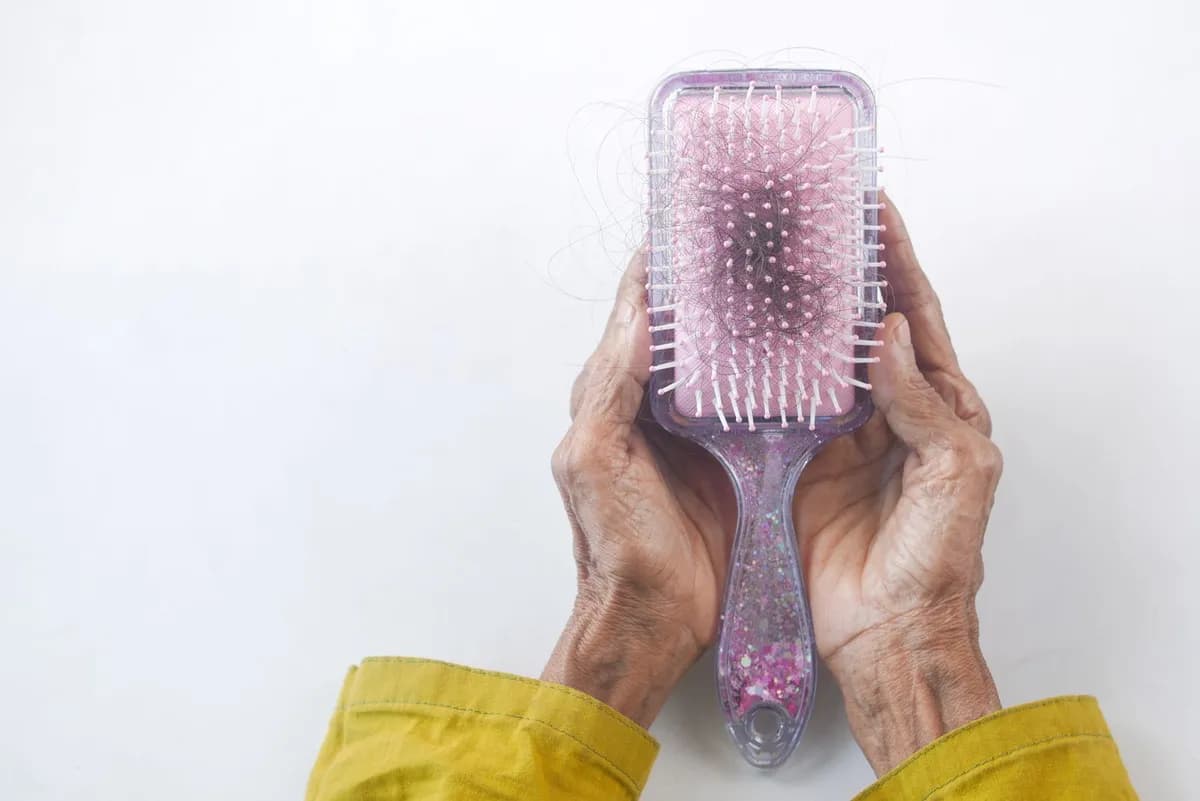
Increased hair on your brush in the first few weeks of minoxidil is a documented, expected response — not a sign of failure. Photo: Towfiqu barbhuiya / Pexels.
How Much Shedding Is Normal and When to Be Concerned
The baseline rate of daily hair shedding for most adults is 50 to 100 hairs per day. During the minoxidil shedding phase, patients may shed 150 to 200 or more hairs per day. This is within the documented range for minoxidil-induced telogen effluvium and, while alarming to experience, does not generally indicate a problem with the treatment.
The critical variables to monitor are not the number of hairs shed per day in isolation, but rather the pattern and trajectory:
Duration matters more than quantity. A period of elevated shedding that peaks around week six and begins declining by week ten follows the expected minoxidil pattern. If shedding continues at the same or increasing rate beyond week twelve without any sign of tapering, this warrants clinical review.
Pattern matters. Minoxidil shedding typically produces a diffuse increase in shedding across the entire scalp rather than a localised or patterned loss. If you are noticing patchy or asymmetric shedding, this is less consistent with minoxidil-induced telogen effluvium and more likely to represent a concurrent or alternative cause.
The character of shed hairs matters. Hairs shed during the minoxidil phase typically have a small white bulb at the root — the hallmark of a telogen hair. Hairs broken at the shaft without a root may indicate a different issue (traction, mechanical damage, or fungal infection). Anagen effluvium — where active growing hairs are shed — has a different root structure and different cause.
New growth matters. One of the most reassuring signs during the shedding phase is the emergence of fine new hairs at the scalp surface in the areas of loss. These may not be immediately visible to the naked eye, but a clinical scalp imaging assessment — such as the scalp imaging and density mapping performed at Carisma Hair Clinic — can confirm their presence even before they become cosmetically significant.
The NHS guidance on hair loss notes that temporary hair shedding from medication is a known and manageable phenomenon, and that distinguishing it from pathological loss is best done with a clinical assessment rather than self-diagnosis.
If you are uncertain whether what you are experiencing falls within the normal shedding pattern, the appropriate response is a clinical review with your prescribing practitioner — not forum research.
Why Stopping Topical Hair-Growth Treatment During the Shedding Phase Is Counterproductive
This is arguably the most important section of this article. The majority of minoxidil discontinuations occur during the shedding phase — and nearly all of them represent a premature exit from a process that was proceeding normally.
Consider the mechanism described above. Minoxidil has stimulated follicles that were in late telogen into beginning a new anagen cycle. Those follicles are actively growing new hair. The shed hairs you are seeing are the old hairs being displaced by the new ones beginning to emerge. The new growth is happening — it is just not yet visible above the scalp surface.
Stopping minoxidil at this point does several things simultaneously:
First, it removes the stimulus that is driving new follicular activity. The follicles that were recruited into anagen begin reverting toward their previous state without sustained minoxidil signalling.
Second, the new hairs that were beginning to emerge — but had not yet reached a cosmetically visible length — are deprived of the growth support they were receiving. Their development may stall.
Third, and critically, the shed hairs have already been lost. If treatment stops before the new growth reaches visible length, the patient is left in a worse cosmetic position than before starting: the old hairs are gone, and the new ones never had the chance to replace them.
This is why the shedding phase, paradoxically, is the worst possible time to discontinue treatment. Stopping at week four to eight is the clinical equivalent of pulling up a seedling to check whether it is rooting. The interruption prevents the very outcome the treatment was designed to deliver.
Patients who stay the course through the shedding phase and reach the three-to-six month mark consistently report better outcomes than those who discontinue early. When comparing finasteride and minoxidil as treatment options, the persistence requirement for minoxidil is a key clinical consideration — it is a long-term intervention that requires commitment through an uncomfortable early phase.
A minoxidil efficacy review confirms consistent evidence that sustained use beyond twelve weeks is associated with measurable hair count improvements in the majority of responders Price VH, Dermatologic Therapy, 2004 — underscoring that early discontinuation forfeits the very benefit the treatment was producing.
At Carisma Hair Clinic, the patients who achieve the most substantial outcomes at the 90-day assessment are frequently those who contacted the clinic during week three or four, concerned about increased shedding. They were reassured, continued treatment, and returned at 90 days to density measurements that confirmed regrowth was underway.
Managing the Shedding Phase: Practical Guidance
There is no medical intervention designed to eliminate the minoxidil shedding phase — and attempting to suppress it pharmacologically risks interfering with the follicular recruitment process that causes it. What you can do is manage the experience and monitor it appropriately.
Document a baseline before starting treatment. Photographs taken in consistent lighting at consistent angles give you an objective reference point. Many patients who feel their shedding is catastrophic find, when comparing to baseline photographs, that the visible density change is smaller than perceived. Hair loss anxiety tends to be disproportionate to objective change — this is normal and expected.
Count shedding hairs for a defined period if you need quantification. Collect and count shed hairs in the shower or on a brush for three to seven days. This gives you objective data rather than an impression. If the count is 150 to 200 hairs per day and declining week on week, you are within the documented normal range for this phase.
Avoid adding variables. The shedding phase is not the time to start new supplements, change your shampoo routine, add a second medication, or make significant dietary changes. Any of these changes confounds your ability to attribute changes in shedding to the right cause.
Book a scheduled follow-up, not an emergency one. Ideally, plan a clinical review at week eight to twelve — not in response to panic during week four. A structured midpoint check allows your clinician to assess whether shedding is following the expected pattern and to perform scalp imaging to confirm new growth emergence.
Resist the urge to increase dosage prematurely. Some patients, reasoning that more minoxidil may speed the process, apply the medication more frequently or at higher concentration than prescribed. This can increase systemic absorption and side effects without meaningfully accelerating the hair cycle. Follow your prescribed protocol.
The comprehensive guide to getting minoxidil prescribed in Malta covers the practical aspects of starting treatment, including what to discuss with your prescribing practitioner at your initial consultation.
The Decision to Continue Is Worth Making
Minoxidil shedding is one of those clinical realities that is very well understood by the practitioners who prescribe it and very poorly understood by patients in the middle of experiencing it — largely because the usual sources of information online are unreliable, inconsistent, and frequently alarming without reason.
The mechanism is clear. The timeline is predictable. The outcome, for the majority of patients who stay the course, is measurably better density at months three to six than they had when they started. The patients who do not reach that outcome are disproportionately those who stopped during weeks four to eight.
If you are currently using minoxidil for hair loss treatment in Malta and are concerned about what you are experiencing, the most useful step is to arrange a structured clinical review — not to consider stopping, but to get an objective assessment of whether what you are seeing is within the expected range, and to have your scalp imaged to confirm new growth emergence.
At Carisma Hair Clinic in St Julian's, Dr. Giovanni Scornavacca provides clinical reviews specifically designed for patients who are mid-treatment and need clarity. Scalp imaging at the 8-to-12-week mark can confirm follicular activity that is not yet visible cosmetically — the kind of objective data that removes anxiety and replaces it with informed confidence.
Frequently Asked Questions About Hair-Growth Treatment Shedding in Malta
Is hair-growth treatment shedding a sign that the treatment is working?
In most cases, yes. Minoxidil shedding occurs because the medication is stimulating resting follicles into a new active growth cycle. The follicles must shed their existing telogen hairs before the new anagen hairs can emerge. It is not proof that minoxidil will produce significant regrowth in every individual, but it does confirm that the drug is biologically active on your scalp and initiating follicular activity. Patients who experience a clear shedding phase are not experiencing a worse outcome than those who do not — both groups can achieve meaningful density gains at six months. Results may vary for each individual.
How long does hair-growth treatment shedding last?
For most patients, the minoxidil shedding phase begins between weeks two and four, peaks between weeks four and eight, and begins to resolve by weeks eight to twelve. In a minority of patients, mild shedding can persist slightly beyond twelve weeks before settling. If elevated shedding continues past the twelve-week mark with no sign of reduction, a clinical review is appropriate to assess whether another cause is contributing.
How much extra hair loss is normal during the hair-growth treatment shedding phase?
The baseline daily shedding rate for most adults is 50 to 100 hairs per day. During the minoxidil shedding phase, daily counts may reach 150 to 200 hairs or modestly above. This elevation, while distressing to observe, is within the documented range for minoxidil-induced telogen effluvium and does not indicate follicular damage. What matters more than the absolute count is the trajectory: is shedding peaking and beginning to decline, or continuing to escalate beyond week eight?
Should I stop topical hair-growth treatment if I am experiencing increased shedding?
In the vast majority of cases, no. Stopping minoxidil during the shedding phase means you have lost the existing telogen hairs without gaining the new anagen hairs that were beginning to emerge. This can leave you worse off than before starting. The shedding phase is a transient event with a defined trajectory. Unless your prescribing clinician identifies a clinical reason to discontinue — an allergic reaction, scalp contact dermatitis, or evidence of a concurrent cause of shedding that warrants separate treatment — stopping during the shed phase is counterproductive.
When does hair-growth treatment shedding become a reason to see a doctor?
You should seek clinical review if: shedding shows no sign of reducing after twelve weeks of consistent minoxidil use; the shedding pattern is asymmetric, patchy, or accompanied by scalp redness, itching, or scaling; you notice shedding at sites distant from where you are applying the medication; the shed hairs show an unusual pattern (no root bulb, or shed at the shaft rather than the follicle); or you develop any systemic symptoms. A clinical review in these circumstances is appropriate to distinguish normal minoxidil-induced shedding from a concurrent cause requiring separate management.
How much does topical hair-growth treatment cost in Malta?
The cost of minoxidil in Malta depends on whether you are using an over-the-counter formulation or a prescription-strength preparation, and whether it is combined with other treatments such as PRP or a clinical programme. At Carisma Hair Clinic, a free initial consultation includes scalp assessment and a personalised protocol recommendation — giving you a clear picture of recommended treatment and associated costs before committing. Book a free consultation to discuss options suited to your specific pattern of loss.
Do I need a prescription for topical hair-growth treatment in Malta?
Standard 2% and 5% minoxidil formulations are available over the counter in Malta. However, higher-strength compounded preparations require a prescription. A clinical assessment before starting treatment is advisable, as other causes of hair loss — nutritional deficiencies, thyroid dysfunction, scalp conditions — require different management entirely. Using the right protocol for your specific situation improves outcomes and avoids unnecessary expenditure on the wrong treatment.
Is topical hair-growth treatment safe to use long-term?
Minoxidil has a well-established long-term safety profile when used as directed. It has been prescribed for hair loss since the 1980s and has been the subject of extensive clinical research. Side effects are generally mild and localised — scalp irritation, dryness, or itching — though systemic absorption can occur with high doses or with oral formulations. Any concerns about side effects should be discussed with your prescribing clinician rather than managed by self-discontinuation.
Ready to Take Control of Your Hair Loss?
If you have been researching your options and want a clinical assessment rather than another generic recommendation, Carisma Hair Clinic offers a comprehensive diagnostic consultation — scalp imaging, density mapping, and a personalised protocol designed around your specific pattern of loss.
→ Book Your Free Hair Loss Consultation
Dr. Giovanni Scornavacca and the team at Carisma Hair Clinic are available at our St Julian's clinic.
About the Author
Dr. Giovanni Scornavacca is a hair restoration specialist with over 20 years of clinical experience, with advanced training at universities in Rome and Bologna. He leads the Hair Reset Protocol at Carisma Hair Clinic — Malta's most complete non-surgical hair regrowth programme. Dr. Scornavacca specialises in diagnosing and treating androgenetic alopecia, telogen effluvium, and complex hair loss presentations using a combination of PRP, exosome therapy, and prescription protocols tailored to each patient.
Medical Disclaimer: This article is for informational purposes only and does not constitute medical advice, diagnosis, or treatment recommendations. Results may vary for each individual. Always consult a qualified healthcare professional before starting any hair loss treatment. Dr. Giovanni Scornavacca and Carisma Hair Clinic are available for clinical consultation at our St Julian's, Malta clinic.
Written and reviewed by Dr. Giovanni Scornavacca, Carisma Hair Clinic. Published: 26 June 2026.
Ready to Take Action?
Book a free online consultation with Nurse Leticia to talk through your hair loss, then see Dr. Giovanni Scornavacca at the clinic for a personalised assessment and treatment plan.
Book a Free Consultation