Dr. Giovanni Scornavacca
26 June 2026 · 25 min read
Medically reviewed by Dr. Giovanni Scornavacca — Hair Restoration Specialist, Carisma Hair Clinic, St Julian's, Malta. 20+ years clinical experience, trained in Rome and Bologna.
Medically reviewed by Dr. Giovanni Scornavacca — Hair Restoration Specialist, Carisma Hair Clinic, St Julian's, Malta. 20+ years clinical experience, with advanced training at universities in Rome and Bologna.
Blood Tests for Hair Loss in Malta: What to Ask For (And What GPs Often Miss)
Key blood tests for hair loss include: Full Blood Count (FBC) to detect anaemia; serum ferritin to assess iron stores; TSH to check thyroid function; free T3 and T4 if TSH is abnormal; Vitamin D; zinc; prolactin (in women); total and free testosterone and DHT (in women with suspected androgenetic loss or PCOS); and ANA if autoimmune causes are suspected.
You left the GP appointment with a printout that said everything was "within normal limits." Your hair is still falling out. The referral felt perfunctory. The advice was to "wait and see."
This experience is common — and it is not a reflection of your imagination. It is a reflection of a blood test panel that was not specific enough to your situation.
Most standard GP panels check for haemoglobin, not iron stores. They order a TSH but not the downstream thyroid hormones that can reveal subclinical dysfunction. They rarely measure vitamin D unless you specifically request it. And for women experiencing hair thinning, the hormonal markers that would distinguish androgenetic loss from PCOS or elevated prolactin are not part of any standard screen.
Blood tests will not tell you whether you have male pattern baldness — that is a clinical diagnosis made by examining your scalp. But they will tell you whether something systemic is contributing to your hair loss, accelerating it, or causing it independently. That distinction matters considerably when it comes to treatment. Results may vary for each individual depending on the pattern and cause of hair loss identified.
This article sets out the specific tests that are clinically relevant to hair loss, what each measures, and what the results actually mean — including the numbers your GP may accept as normal but which, in the context of hair medicine, are not.
Contents
- Why Blood Tests Matter in a Hair Loss Assessment
- The Essential Hair Loss Blood Panel: Test by Test
- What GP Panels in Malta Often Miss
- Normal vs Optimal: The Ranges That Matter for Hair
- When Blood Tests Are Not Enough: The Role of Scalp Imaging
- Getting a Proper Hair Loss Blood Panel in Malta
- Frequently Asked Questions
Why Blood Tests Matter in a Hair Loss Assessment
The primary purpose of a hair loss blood panel is not to diagnose androgenetic alopecia — that diagnosis is made by examining the pattern, density, and miniaturisation of hair follicles on your scalp, and confirmed through scalp imaging and density mapping. A blood test cannot detect the DHT sensitivity in your follicles, and no laboratory value will tell you your Norwood stage.
What blood tests do is exclude, or identify, the systemic conditions that cause or compound hair shedding independently of genetics.
Telogen effluvium — a diffuse, non-patterned shedding that pushes large numbers of hairs into the resting phase simultaneously — is frequently triggered by systemic stressors. Iron deficiency, thyroid dysfunction, vitamin deficiencies, and hormonal imbalances can all initiate or sustain it. These conditions are treatable. Addressing them can halt the shedding and allow the hair cycle to normalise. Failing to identify them means treating the surface presentation while the underlying cause continues.
Even in confirmed androgenetic alopecia, systemic factors can accelerate the genetically programmed process. A man with male pattern baldness and undetected iron deficiency will typically shed faster and respond more poorly to treatment than one with optimised nutritional status. Identifying and correcting modifiable factors before or alongside medical treatment consistently produces better outcomes.
Clinical evidence suggests that in uncomplicated male androgenetic alopecia with a classic presentation and clear family history, blood tests may not be required at first presentation. However, in women, in cases of rapid-onset loss, in diffuse shedding without a clear pattern, or in any case where systemic causes have not been excluded, blood testing is standard of care and clinically appropriate to request. Research published in PMC on androgenetic alopecia confirms that thorough evaluation of contributing systemic factors significantly improves treatment outcomes.
The Essential Hair Loss Blood Panel: Test by Test
The following tests constitute a thorough and clinically defensible hair loss blood panel. Not all of them will be relevant in every case, but understanding what each one measures helps you have a more specific conversation with your doctor — and helps you assess whether the panel you have already had was adequate.
Full Blood Count (FBC)
The FBC checks red blood cell volume, white blood cell count, platelet count, and haemoglobin levels. For hair loss purposes, the most relevant value is haemoglobin — the protein that carries oxygen in red blood cells.
Anaemia reduces the oxygen supply available to hair follicles, which are among the most metabolically active structures in the body. Moderate to severe anaemia can trigger telogen effluvium. However — and this is important — many patients with iron deficiency sufficient to cause hair shedding will have a normal haemoglobin level. The FBC identifies overt anaemia; it does not detect depleted iron stores. That requires a separate test.
Serum Ferritin
Ferritin is the storage form of iron. It is the most sensitive single marker for iron deficiency and, for hair loss, the most important iron-related value to request.
The standard laboratory "normal range" for serum ferritin typically has a lower limit of approximately 10–15 µg/L for women and slightly higher for men. These thresholds were established to detect iron deficiency anaemia — not to optimise the hair growth cycle. Clinical evidence in hair medicine suggests that ferritin levels need to be considerably higher to support normal anagen phase duration and follicular metabolism.
The commonly cited threshold in trichology practice is a ferritin level of 70 µg/L or above for hair health. Some hair loss physicians set the functional threshold even higher, at 80–100 µg/L. A result of 35 µg/L may fall within the laboratory's reference range and be reported as normal by your GP, while being sub-optimal from a hair perspective. If your ferritin is below 70 µg/L and you are experiencing diffuse hair shedding, iron status is worth addressing before concluding that the shedding is purely androgenetic.
This is one of the most common gaps in standard blood panels: haemoglobin is tested but ferritin is not requested, or ferritin is tested and a low-normal result is dismissed without consideration of the hair-specific threshold.
Thyroid-Stimulating Hormone (TSH)
TSH is released by the pituitary gland and controls the thyroid gland's output of thyroid hormones. An elevated TSH indicates hypothyroidism (underactive thyroid); a suppressed TSH suggests hyperthyroidism (overactive thyroid). Both conditions can cause diffuse, non-patterned hair shedding.
Hypothyroid hair loss typically presents as generalised thinning across the scalp, often accompanied by fatigue, weight gain, feeling cold, and dry skin. Hyperthyroid hair loss can produce a finer, more diffuse shed, sometimes with weight loss and palpitations.
TSH is the appropriate first-line thyroid test. It is highly sensitive and will flag most clinically significant thyroid dysfunction.
Free T3 and Free T4
If your TSH is abnormal, or if TSH is within normal limits but there is clinical suspicion of subclinical thyroid dysfunction, free T3 and free T4 provide a more complete picture of actual thyroid hormone levels.
TSH can occasionally be within range while free T4 or free T3 are low — a pattern sometimes called euthyroid sick syndrome or subclinical hypothyroidism. In some patients, this level of thyroid dysfunction is sufficient to affect hair cycling even when TSH alone does not appear alarming. If your hair loss is diffuse, persistent, and otherwise unexplained, requesting free T3 and T4 alongside TSH is clinically reasonable.
Vitamin D (25-OH Vitamin D)
Vitamin D deficiency has been increasingly associated with telogen effluvium and alopecia areata in clinical studies. The mechanism is not fully established, but vitamin D receptors are present in hair follicle keratinocytes, suggesting a direct role in follicular cycling.
In Malta, sun exposure is substantial from spring through autumn — UV index reaches 9–10 or above in summer, classified as Very High to Extreme by the WHO. Despite this, vitamin D deficiency remains prevalent, partly because UV-protective behaviour (clothing, shade, sunscreen) reduces cutaneous synthesis. Indoor working environments also limit meaningful sun exposure during peak UV hours.
A blood level below 50 nmol/L is generally considered deficient. Levels between 50–75 nmol/L are considered insufficient by some reference standards. Optimal levels for general health — and likely for hair — are generally considered to be above 75 nmol/L, with many clinicians targeting 100–150 nmol/L. This is another test that is underrequested in standard GP panels.
Zinc
Zinc deficiency is less common than iron or vitamin D deficiency but is an established contributor to hair loss when present. Zinc is required for normal DNA synthesis and cell division in rapidly proliferating cells — including hair follicle matrix cells. Deficiency can cause diffuse shedding and, in severe cases, hair shaft abnormalities.
Serum zinc testing is not part of most routine panels. It is most relevant in individuals with restricted dietary intake, malabsorption conditions, or who follow exclusively plant-based diets without supplementation. It is worth including in a comprehensive hair loss workup, particularly if other markers return normal.
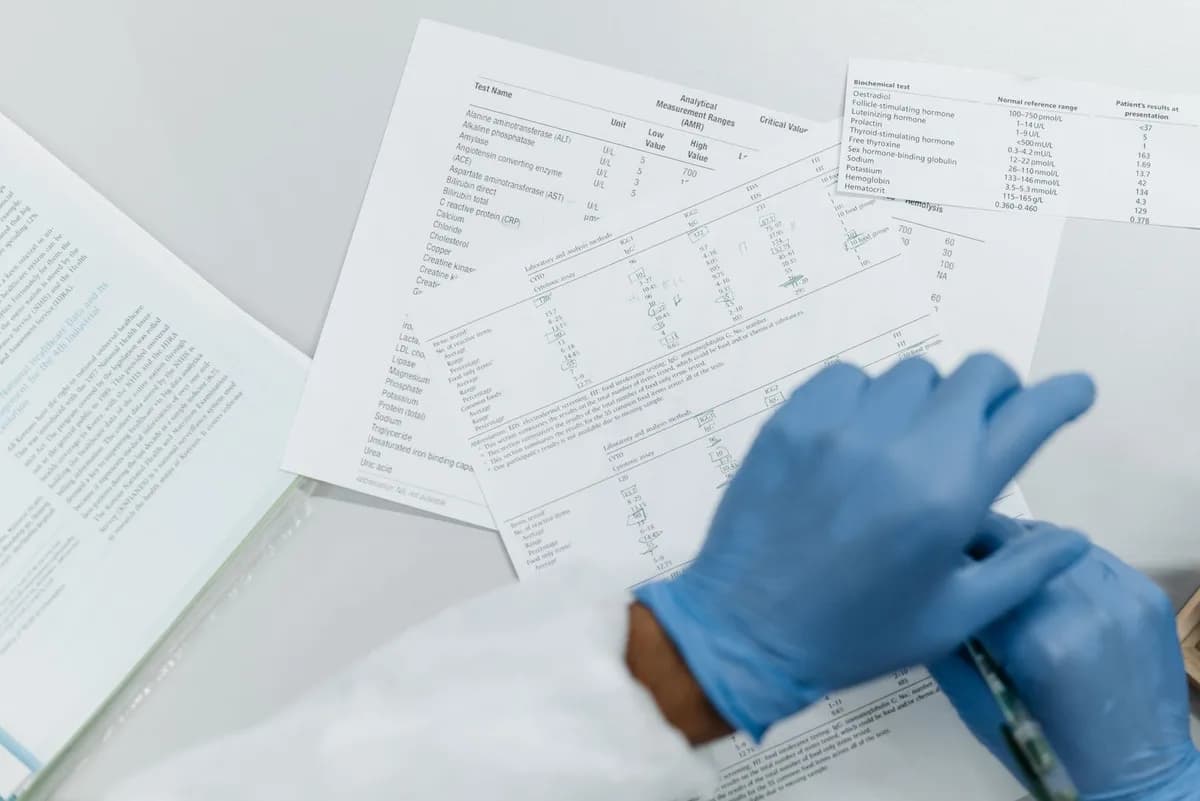
Photo by Pavel Danilyuk. Knowing which values to question — not just which tests to order — is where the diagnostic gap usually lies.
Prolactin
Elevated prolactin (hyperprolactinaemia) is a less common but important cause of hair loss in women. Prolactin is a hormone produced by the pituitary gland, most well-known for its role in lactation. Elevated levels outside of pregnancy and breastfeeding can disrupt the hormonal balance that governs hair cycling, and in some cases are associated with androgenic-pattern hair thinning.
Hyperprolactinaemia can result from pituitary adenomas (usually benign), certain medications (including some antidepressants, antipsychotics, and antihypertensives), hypothyroidism, or polycystic ovarian syndrome (PCOS). It is primarily relevant in women presenting with diffuse or androgenic-pattern hair thinning, particularly when accompanied by menstrual irregularity, galactorrhoea, or other hormonal symptoms.
Total and Free Testosterone, and DHT
In men with straightforward androgenetic alopecia, testosterone levels are typically normal — the issue is not how much testosterone is circulating, but how sensitive the follicles are to DHT at the genetic level. Testosterone testing adds limited diagnostic value in uncomplicated male pattern baldness.
In women, the picture is different. Female androgenetic hair loss — which clinical studies indicate affects approximately 40% of women by age 50 and is significantly under-diagnosed — can be driven by elevated androgens, by relative androgen sensitivity at the follicular level, or both. In women presenting with pattern hair thinning, testing total testosterone, free testosterone (which reflects biologically active hormone), and DHEA-S (a precursor androgen produced by the adrenal gland) helps identify whether elevated androgens are a contributing factor.
PCOS is one of the most common underlying conditions in women presenting with androgenetic-pattern hair loss in their 20s and 30s. A full hormonal profile, including LH, FSH, total and free testosterone, and DHEA-S, is appropriate in any woman with hair loss who also has irregular cycles, acne, or other signs of androgen excess. Understanding why hair falls out in this context requires treating the systemic hormonal picture, not just the scalp.
Antinuclear Antibodies (ANA)
ANA testing is relevant when alopecia areata or other autoimmune causes of hair loss are suspected. Alopecia areata presents distinctively — patchy, well-defined bald areas rather than diffuse thinning or recession — but it can be confused with other forms of hair loss, particularly in early or atypical presentations.
ANA is not a first-line test for androgenetic alopecia. It should be requested where the clinical picture suggests an autoimmune or inflammatory process, or where pattern hair loss does not respond as expected to standard treatment.
What GP Panels in Malta Often Miss
There is no criticism intended here of general practice. GPs are managing a broad remit and typically order panels appropriate for detecting systemic disease at a population level. The problem is that those thresholds do not always align with hair medicine's more specific requirements.
The most common gaps observed in patients presenting to specialist hair clinics after a GP workup are:
Ferritin not requested, or a low-normal result not acted on. A haemoglobin test is not a substitute for a ferritin test. A ferritin result in the low 20s or 30s µg/L may be documented as normal and not discussed, when it is sub-optimal for hair health by a significant margin.
Free T3 and T4 not included when TSH is borderline. TSH in the high-normal range (e.g. 3.5–4.5 mIU/L) is not flagged by most laboratory systems, yet some patients with values in this range have functional hypothyroid symptoms including hair shedding. Requesting free T4 adds meaningful information.
Vitamin D not included in the initial panel. Unless a patient specifically requests it, vitamin D is rarely part of a standard workup in Malta despite the known prevalence of deficiency even in a sun-rich environment. The NHS guidelines on hair loss also acknowledge nutritional deficiency as a significant contributing factor worth investigating.
Hormonal panel inadequate for women. Ordering a standard "hormone check" in a woman presenting with hair loss may return testosterone and oestrogen values only, without free testosterone, DHEA-S, prolactin, or a fasting insulin relevant to PCOS assessment.
If you have already had blood tests and been told they are normal, it is worth reviewing exactly which tests were included — and at what values — before accepting that systemic causes have been fully excluded. A copy of your results, with reference ranges, is useful to bring to a specialist consultation.
Normal vs Optimal: The Ranges That Matter for Hair
One of the most practically useful pieces of information for anyone preparing for a hair loss consultation is understanding that laboratory reference ranges are not the same as optimal ranges for hair health. Reference ranges are constructed from population distributions and designed to flag disease — not to identify the sub-optimal levels that can impair a biological process as sensitive as hair cycling.
Evidence suggests that operating below optimal thresholds — even when within population-normal ranges — can measurably affect follicular metabolism, anagen phase duration, and the rate of telogen shedding. The key discrepancies to be aware of:
| Marker | Laboratory "Normal" Lower Limit | Hair Medicine Functional Threshold |
|---|---|---|
| Serum Ferritin (women) | 10–15 µg/L | ≥70 µg/L |
| Serum Ferritin (men) | 20–30 µg/L | ≥70 µg/L |
| Vitamin D (25-OH) | 50 nmol/L | ≥75 nmol/L (many clinicians target higher) |
| TSH (high end) | Up to 4.0–5.0 mIU/L (lab-dependent) | Borderline high-normal worth further investigation in hair loss context |
This does not mean that any result below these thresholds definitively explains hair loss, or that supplementing to reach these values will necessarily halt shedding. It means that these values are worth discussing with your clinician in the context of your symptoms, rather than being dismissed because they fall within a broad population reference range. Results may vary for each individual depending on the full clinical picture.
When Blood Tests Are Not Enough: The Role of Scalp Imaging
This is a point that cannot be overstated. A blood panel — however comprehensive — cannot diagnose androgenetic alopecia. It cannot detect follicular miniaturisation. It cannot tell you how many follicles are in the anagen versus telogen phase, whether you have early DHT-driven recession, or what your density is relative to age-matched norms.
Those answers come from direct examination of the scalp and, ideally, from scalp imaging and density mapping. Digital trichoscopy allows visualisation of individual follicles, hair shaft diameter variation, and the miniaturisation patterns that characterise androgenetic loss before it becomes clinically obvious. At Carisma Hair Clinic, this imaging is a core component of the pre-consultation diagnostic process — not an add-on.
The pattern of information from blood tests and scalp imaging is complementary. Blood tests rule out systemic contributors. Scalp imaging characterises what is happening at the follicular level. Together, they inform whether a patient's hair loss is purely androgenetic, has a systemic component, or involves a combination of both — and that distinction directly shapes treatment.
The American Academy of Dermatology recommends a comprehensive diagnostic approach to hair loss that combines clinical history, blood work, and scalp examination — the same multi-factor approach used at Carisma Hair Clinic.
For broader context on the other contributing causes of hair loss in men, or to better understand the distinction between male pattern baldness and other forms of shedding, those articles offer detailed background reading that is useful before a clinical appointment. Once a systemic cause has been confirmed or excluded, evaluating treatment options becomes a more targeted and productive conversation.
Getting a Proper Hair Loss Blood Panel in Malta
In Malta, blood tests for hair loss are accessible through your GP, through private laboratories, or through specialist hair clinics. The most practical approach depends on your circumstances.
Via your GP: You can request the specific tests listed in this article by name. A GP is entitled to order any of them. The most likely friction point is that some tests — vitamin D, full thyroid panel including free T3/T4, zinc, or a full female hormonal profile — may not be considered "clinically indicated" under routine practice guidelines, and some may not be covered by the government health system without a clear indication. Private GP consultations in Malta typically allow more flexibility in test ordering.
Via private laboratories: Several private diagnostic laboratories in Malta offer self-referred blood testing. A comprehensive hair loss panel can be commissioned without a GP referral, though interpreting the results without clinical context adds risk — a low ferritin may be identified but not contextualised against your hair loss pattern, thyroid function, and scalp examination.
Through Carisma Hair Clinic: Prior to a consultation at Carisma Hair Clinic, patients are advised on which blood tests are relevant to their presentation. If you already have recent results, bring them — they form part of the diagnostic workup. If you have not had relevant blood tests, the consultation will clarify exactly which tests to request and from whom. The Hair Reset Protocol begins with a complete diagnostic picture, not a surface assessment.
The most direct preparation for your first consultation is this: if you have existing blood test results, bring the original report with reference ranges. If you have not had blood tests done, do not worry — knowing what to ask for, and who to ask, is something we can help you with from the first appointment.
Ready to Take Control of Your Hair Loss?
If you've been researching your options and want a clinical assessment rather than another generic recommendation, Carisma Hair Clinic offers a comprehensive diagnostic consultation — scalp imaging, density mapping, and a personalised protocol designed around your specific pattern of loss.
→ Book Your Free Hair Loss Consultation
Dr. Giovanni Scornavacca and the team at Carisma Hair Clinic are available at our St Julian's clinic.
About the Author
Dr. Giovanni Scornavacca is a hair restoration specialist with over 20 years of clinical experience, with advanced training at universities in Rome and Bologna. He leads the Hair Reset Protocol at Carisma Hair Clinic — Malta's most complete non-surgical hair regrowth programme. Dr. Scornavacca specialises in diagnosing and treating androgenetic alopecia, telogen effluvium, and complex hair loss presentations using PRP, exosome therapy, and tailored prescription protocols.
Frequently Asked Questions About Blood Tests for Hair Loss in Malta
What blood tests should I ask for if I'm losing my hair?
A comprehensive hair loss panel should include: Full Blood Count (FBC), serum ferritin, TSH, free T3 and T4 (if TSH is outside normal limits or you have thyroid symptoms), 25-OH Vitamin D, and zinc. For women experiencing androgenetic-pattern thinning or diffuse shedding, add: total testosterone, free testosterone, DHEA-S, prolactin, LH, and FSH. If alopecia areata is possible, request ANA. Bring the actual results — with reference ranges — to any specialist consultation rather than relying on a GP's verbal summary.
What ferritin level is needed for healthy hair growth?
Standard laboratory reference ranges for ferritin typically start from around 10–15 µg/L for women and 20–30 µg/L for men. These thresholds are calibrated to detect iron deficiency anaemia, not to assess whether iron stores are sufficient for the hair growth cycle. Clinical evidence in hair medicine suggests that serum ferritin needs to be at least 70 µg/L to support normal anagen phase duration. A result in the 20s or 30s µg/L may appear on your report as within the normal range while being sub-optimal for hair health. If your ferritin is below 70 µg/L and you are experiencing diffuse shedding, this is worth discussing with a hair loss specialist. Results may vary for each individual.
Can a GP in Malta order all the blood tests I need for hair loss?
Yes, a GP in Malta can order any of the tests listed in this article. The practical challenge is that some tests — particularly vitamin D, full thyroid panels, and hormonal profiles including free testosterone and DHEA-S — may not be considered clinically indicated under routine practice guidelines, particularly if you are presenting primarily with hair loss rather than other symptoms. Private GP consultations generally allow more flexibility. Alternatively, a specialist hair loss clinic can direct you to the specific tests that are relevant to your presentation and advise on how to access them.
Will blood tests tell me if I have male pattern baldness?
No. Androgenetic alopecia (male pattern baldness) is a clinical diagnosis made by examining the pattern, distribution, and miniaturisation characteristics of your hair loss — and confirmed through scalp imaging. Blood tests cannot detect follicular DHT sensitivity or the miniaturisation process. In uncomplicated male pattern baldness with a typical presentation and clear family history, blood tests may show entirely normal results. Their purpose is to exclude or identify systemic conditions — such as thyroid disease, iron deficiency, or hormonal imbalances — that may be contributing alongside genetics, not to diagnose the genetic component itself.
How long does a hair loss blood panel take to come back in Malta?
Turnaround time varies by laboratory and which tests are included. Standard tests — FBC, ferritin, TSH, vitamin D — are typically returned within 24–72 hours through private laboratories in Malta. More specialised tests, including full hormonal profiles or ANA, may take slightly longer, usually 3–5 business days. Results are generally provided as a printed report with reference ranges. Keep the original report rather than relying on a verbal summary, as the actual numbers and their relationship to reference ranges are clinically significant.
Is it safe to self-refer for hair loss blood tests in Malta without a GP?
Most standard blood tests — including ferritin, TSH, vitamin D, and basic hormonal panels — can be safely self-referred through private diagnostic laboratories in Malta without clinical risk. The test itself carries only the minor discomfort of a routine blood draw. The more important consideration is interpretation: a low-normal ferritin or borderline TSH requires clinical context to interpret meaningfully. Seeing a hair loss specialist either before or immediately after self-referred testing ensures that results are read in the context of your full clinical picture — pattern of loss, scalp imaging, and medical history — rather than in isolation.
Medical Disclaimer: This article is for informational purposes only and does not constitute medical advice, diagnosis, or treatment recommendations. Results may vary for each individual. Always consult a qualified healthcare professional before starting any hair loss treatment. Dr. Giovanni Scornavacca and Carisma Hair Clinic are available for clinical consultation at our St Julian's, Malta clinic.
Written and reviewed by Dr. Giovanni Scornavacca, Carisma Hair Clinic. Published: 26 June 2026.
Ready to Take Action?
Book a free online consultation with Nurse Leticia to talk through your hair loss, then see Dr. Giovanni Scornavacca at the clinic for a personalised assessment and treatment plan.
Book a Free Consultation